

50% OFF + 2 FREE Accounts of the Same Size!

CODE: 2XBOGO
Get Instantly Funded

August 8, 2026

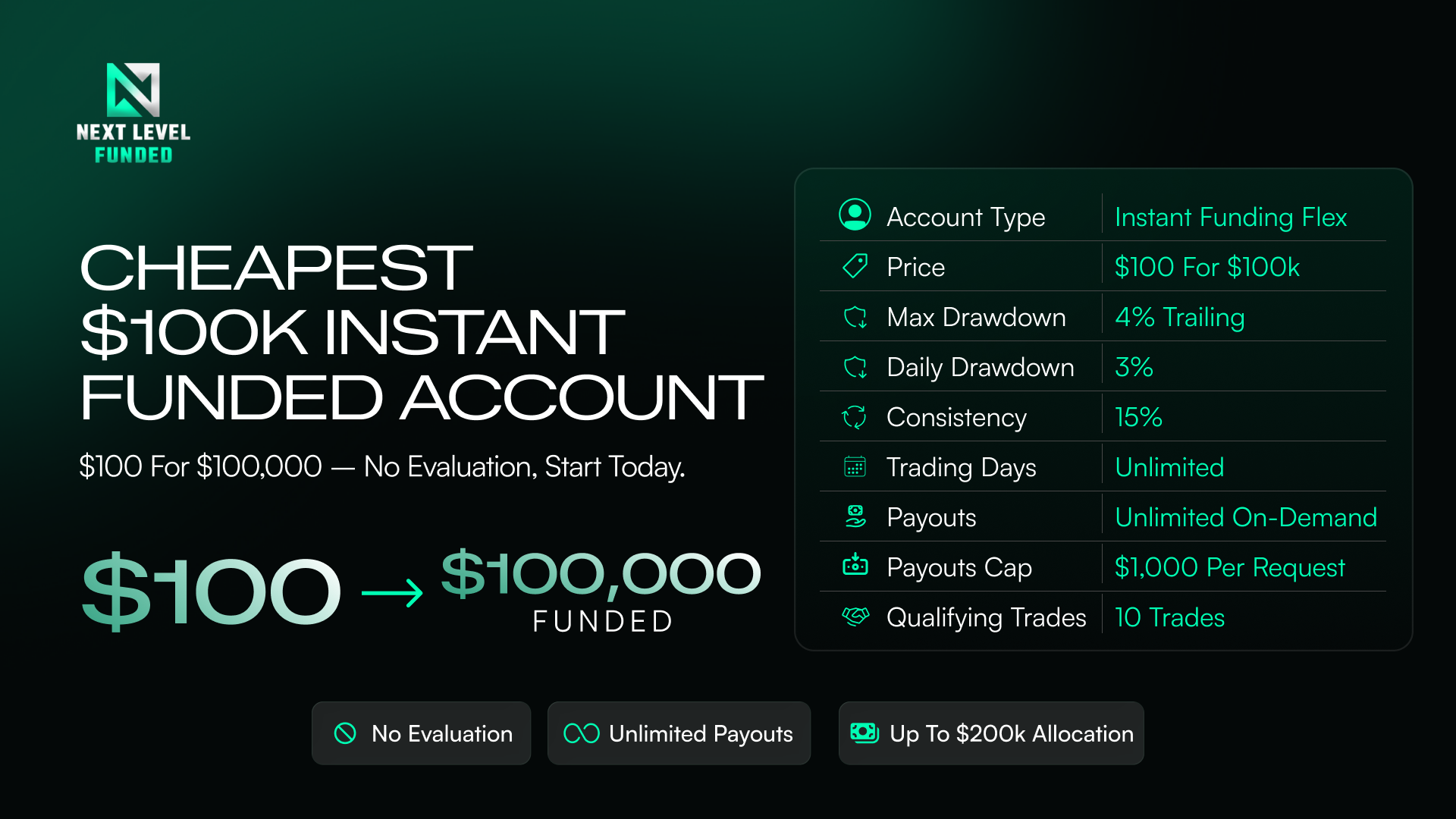
The Cheapest Instant Funded $100k Account for $100: NLF Instant Funding Flex

By Spencer Todd, Founder of Next Level Funded If you have been searching for the cheapest way to get access to a $100,000 instant funded account, your search is over.

August 5, 2026

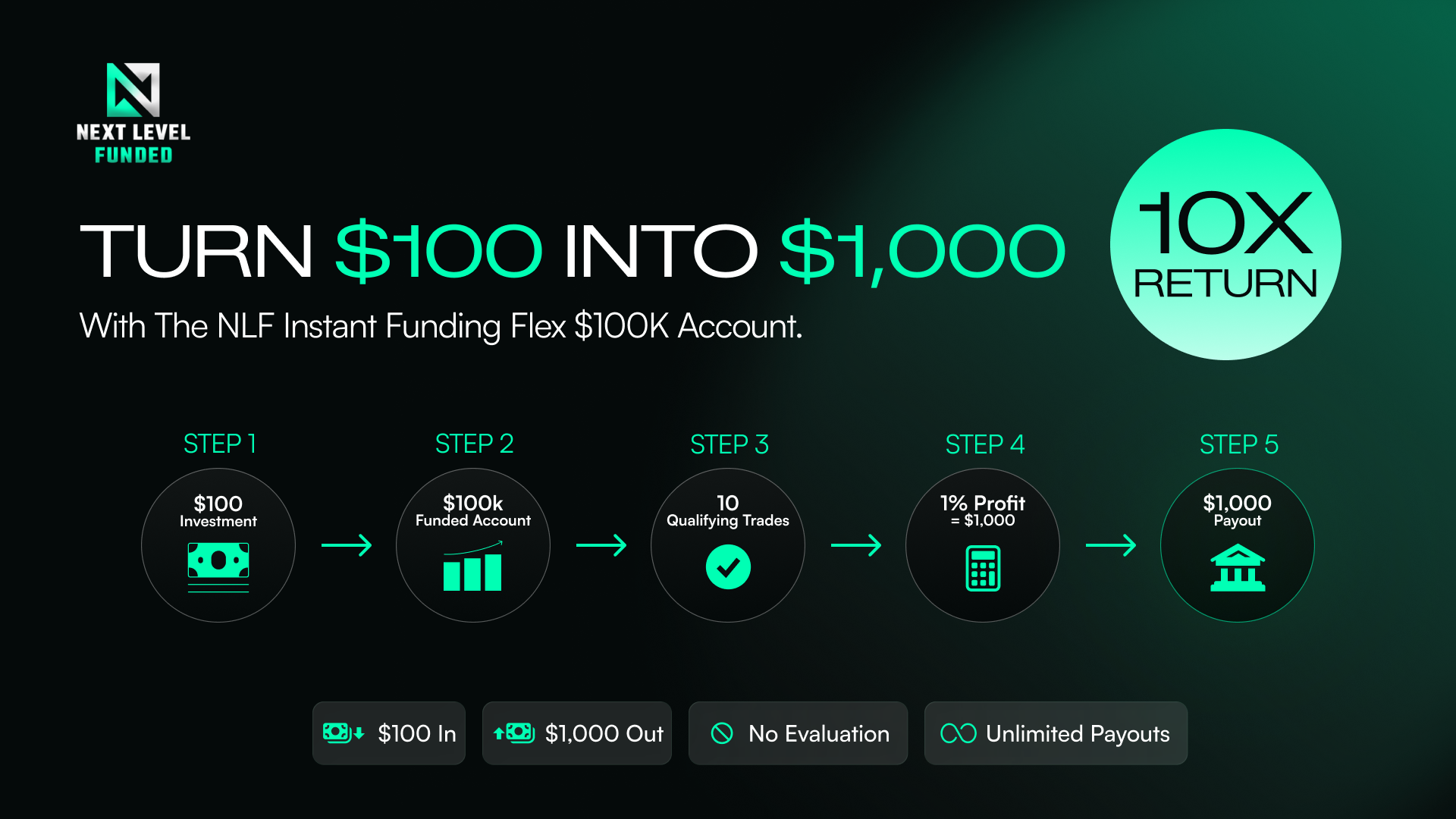
How to Turn $100 into $1,000 with Instant Funded Trading

By Spencer Todd, Founder of Next Level Funded Turning $100 into $1,000 is one of the oldest goals in trading. A 10x return sounds extraordinary — the kind of result that takes years of compounding in a traditional brokerage account.

August 3, 2026

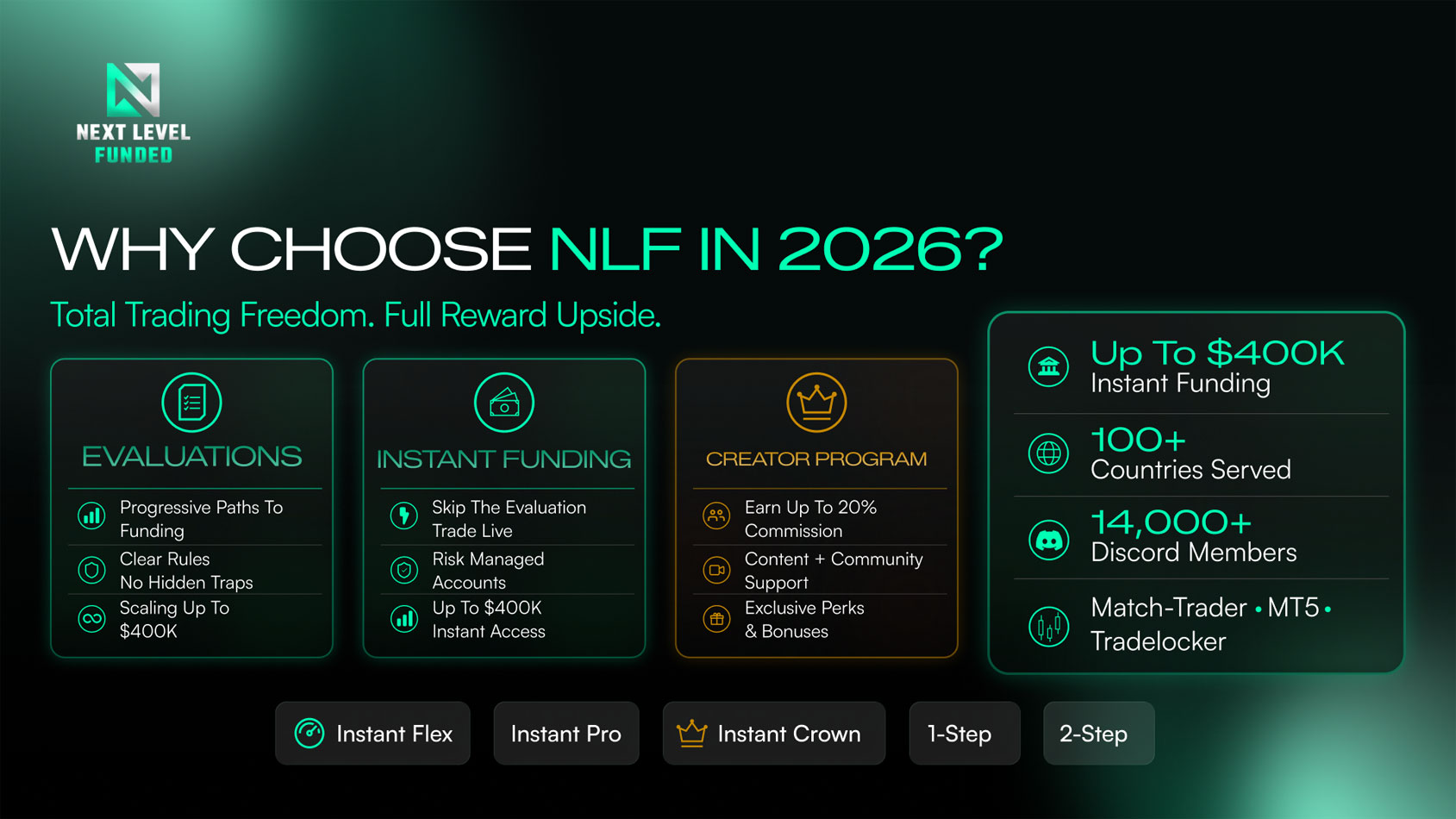
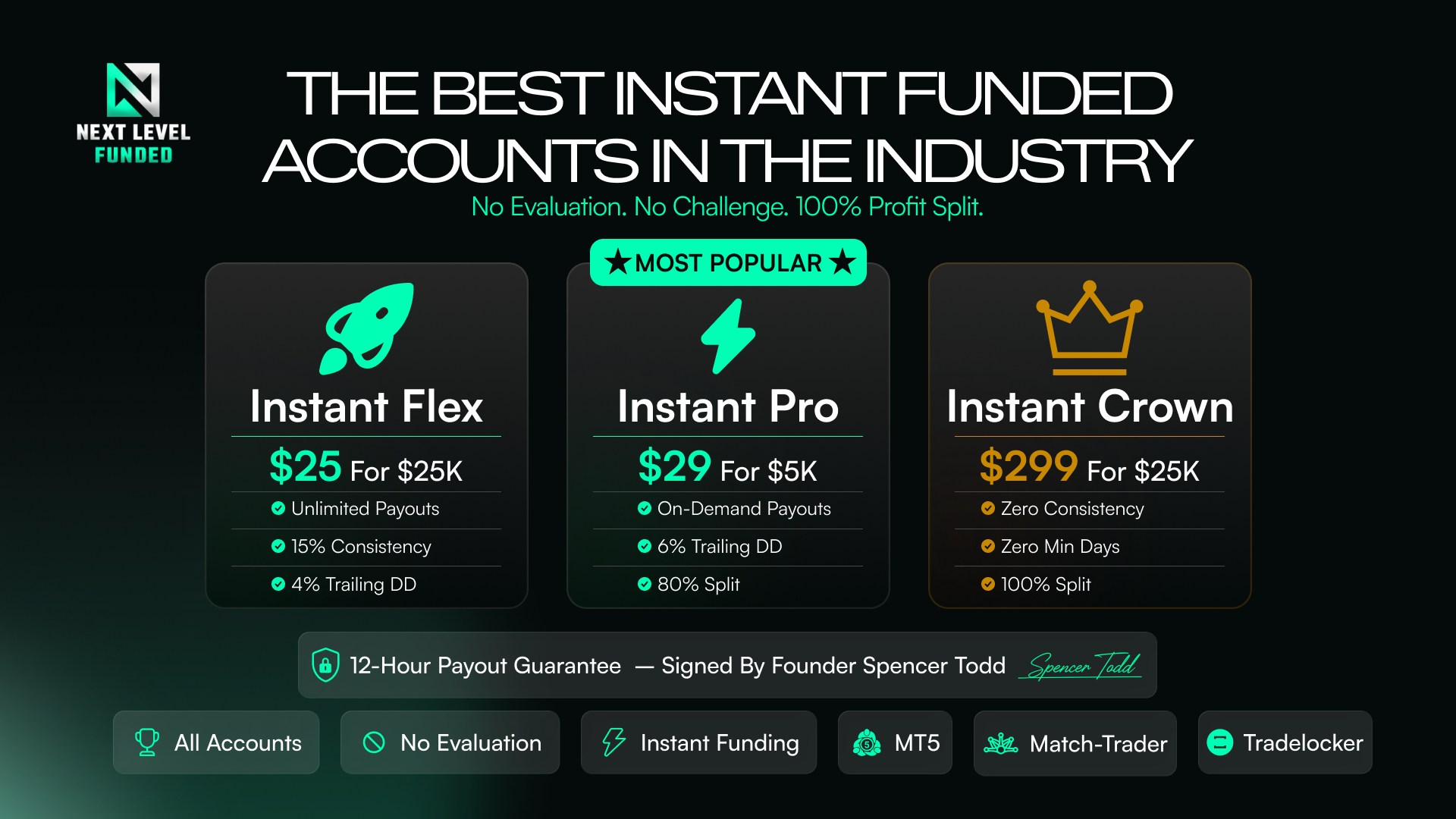
Why Next Level Funded's Instant Accounts Are the Best in the Industry

By Spencer Todd, Founder of Next Level Funded The instant funding model has transformed the prop trading industry. Instead of spending weeks or months battling through evaluation phases, traders can now access live capital immediately — the moment they purchase an account.

August 1, 2026

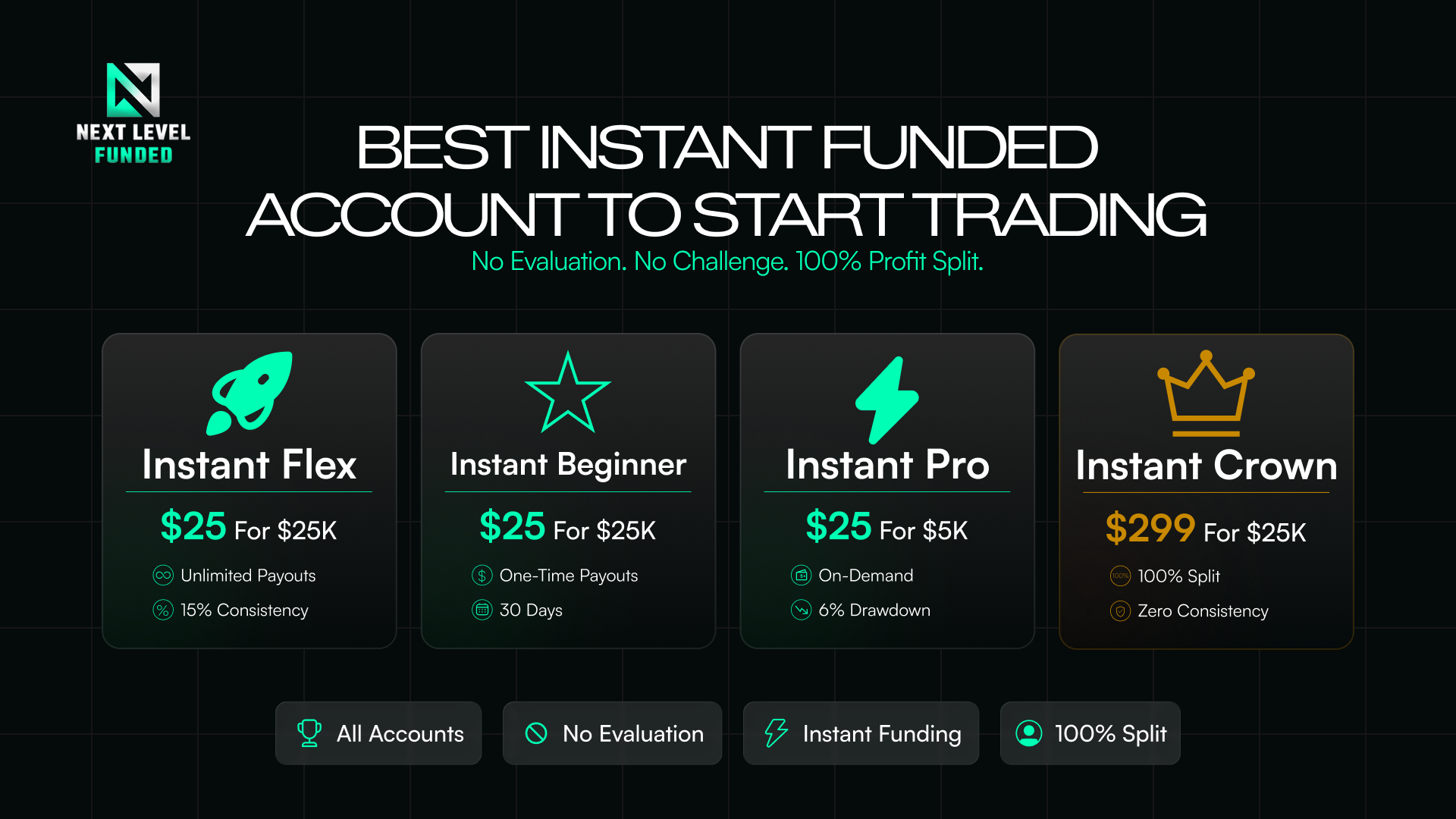
The Best Instant Funded Account to Start Trading On in 2026

By Spencer Todd, Founder of Next Level Funded The biggest question every new prop trader asks is: Which instant funded account should I start with?

July 30, 2026

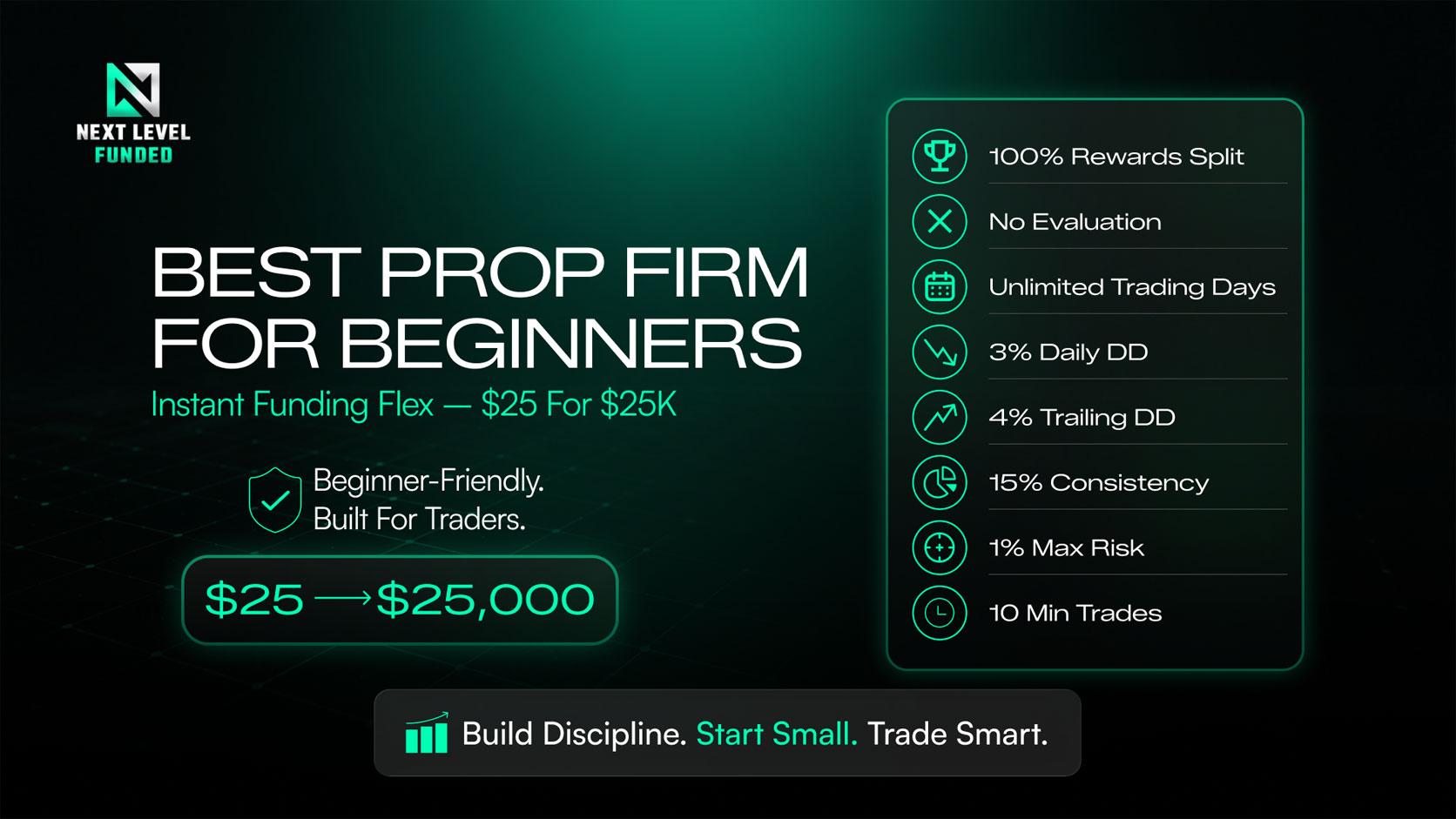
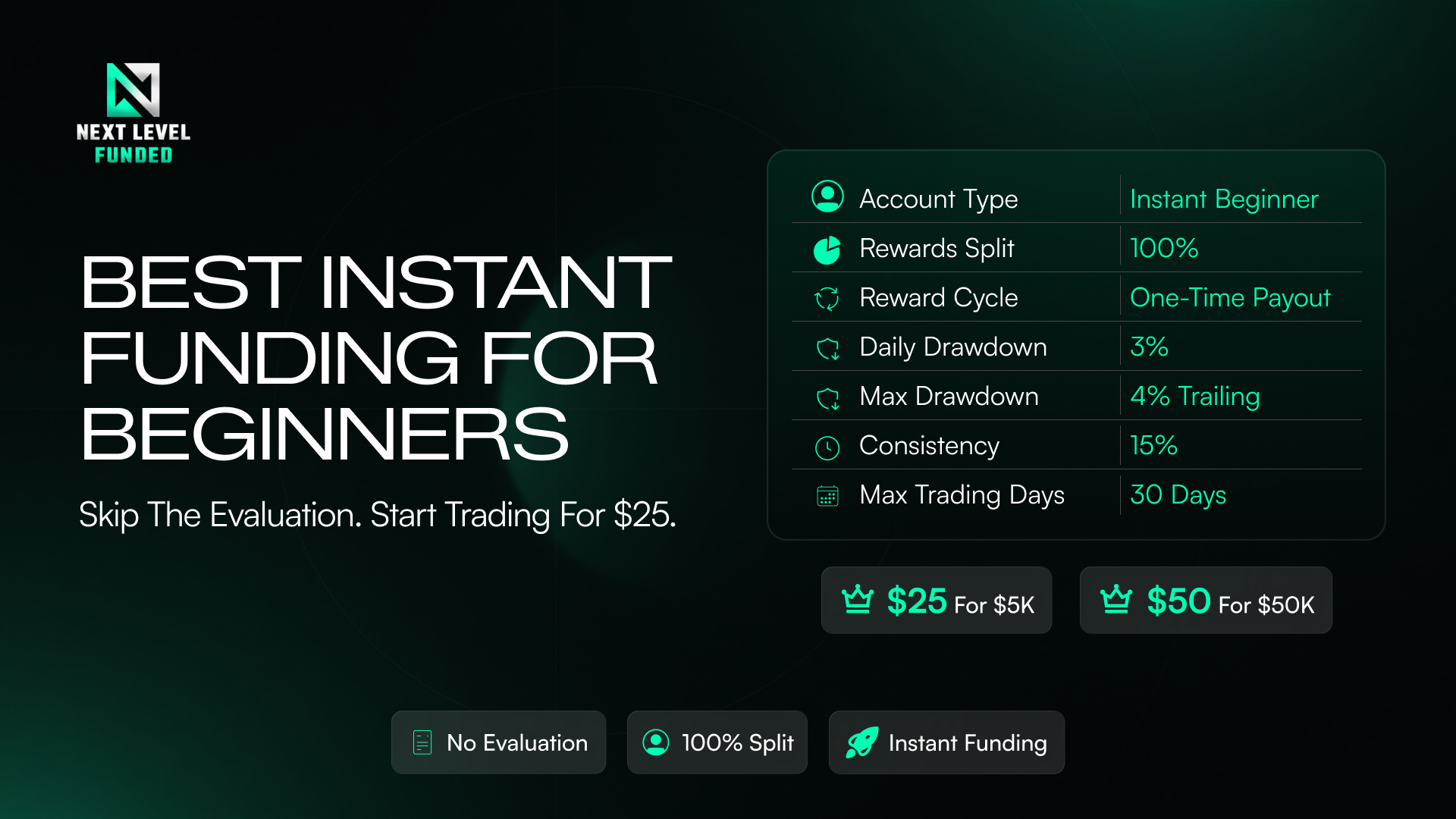
The Best Instant Funding Prop Firm Account for Beginners in 2026

By Spencer Todd, Founder of Next Level Funded One of the biggest hurdles for new traders is making the leap from a demo account to live capital. Demo trading teaches you the mechanics of the market, but it cannot teach you the psychology of risk.

July 28, 2026

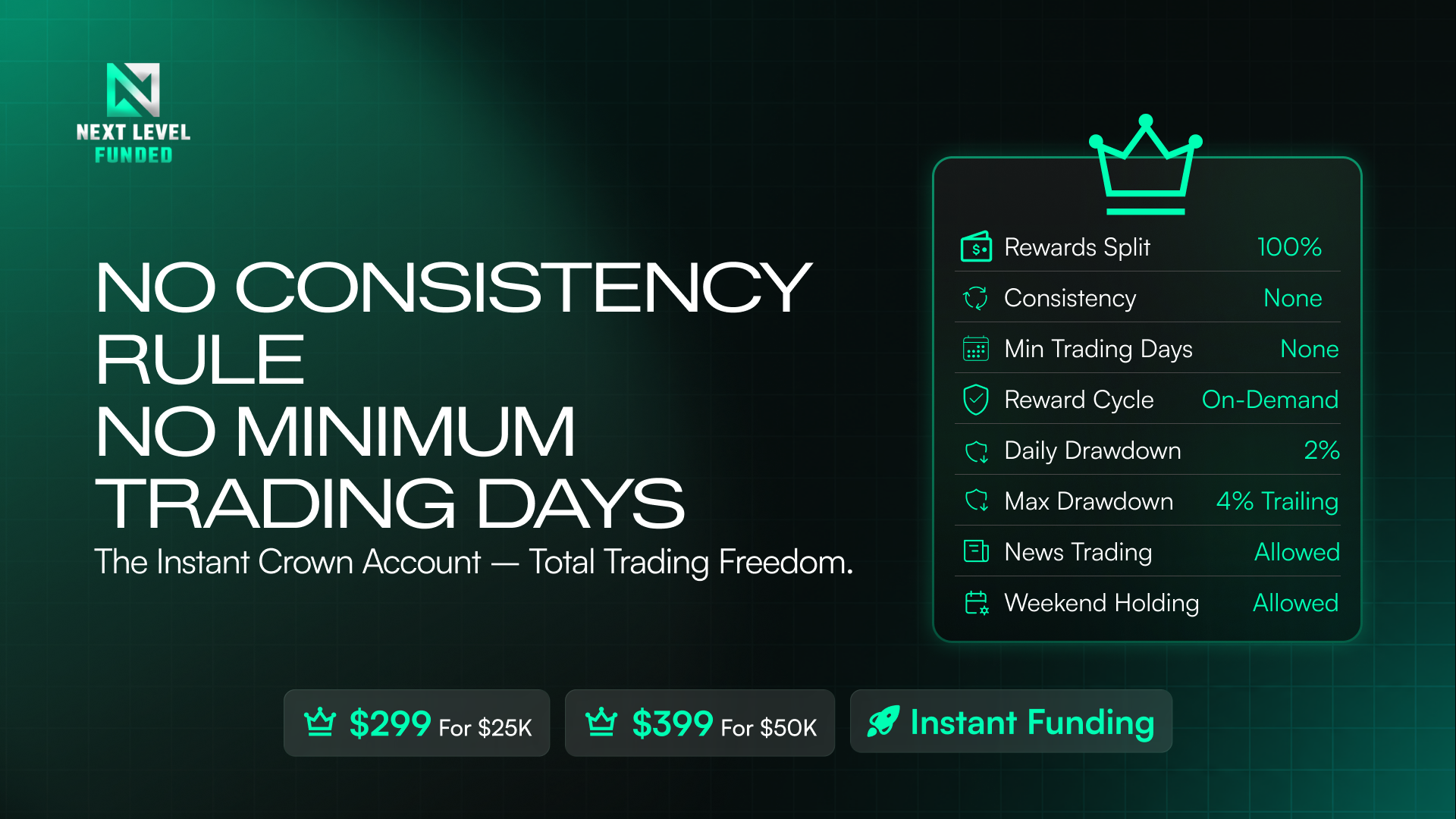
Instant Funding with No Consistency Rule or Minimum Trading Days

By Spencer Todd, Founder of Next Level Funded The proprietary trading industry is filled with "catch-22" accounts. A firm will offer you instant funding, but then bury you in hidden rules. They will cap your profit split, force you to trade for a minimum of 10 days before requesting a payout, and implement strict consistency rules that punish you for catching a massive, highly profitable trend.

July 27, 2026

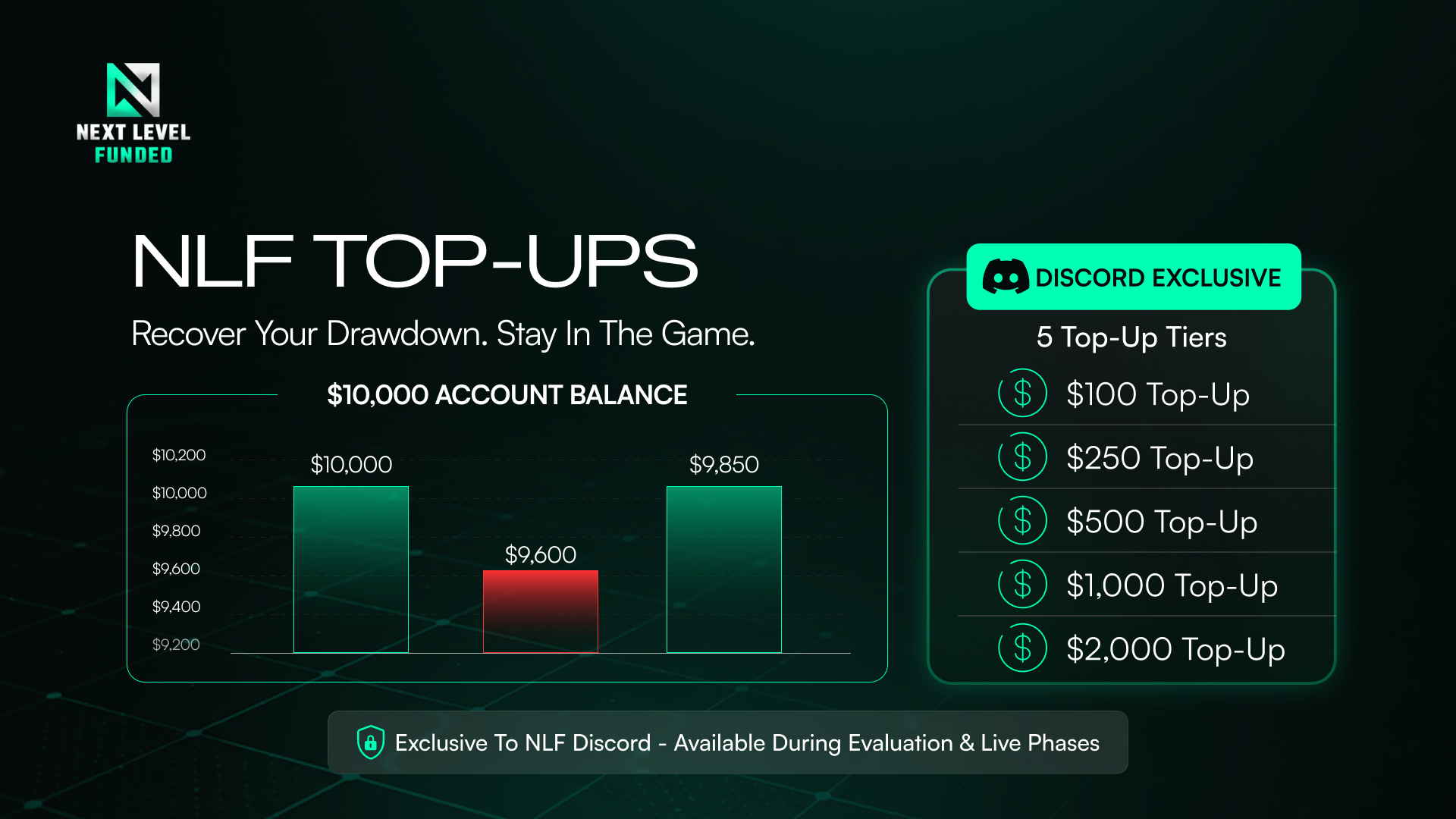
NLF Top-Ups: How to Recover Your Drawdown and Stay in the Game

Every trader, no matter how skilled, experiences losing streaks. It is a mathematical certainty in the financial markets. The difference between an amateur and a professional is how they manage that drawdown.

July 26, 2026

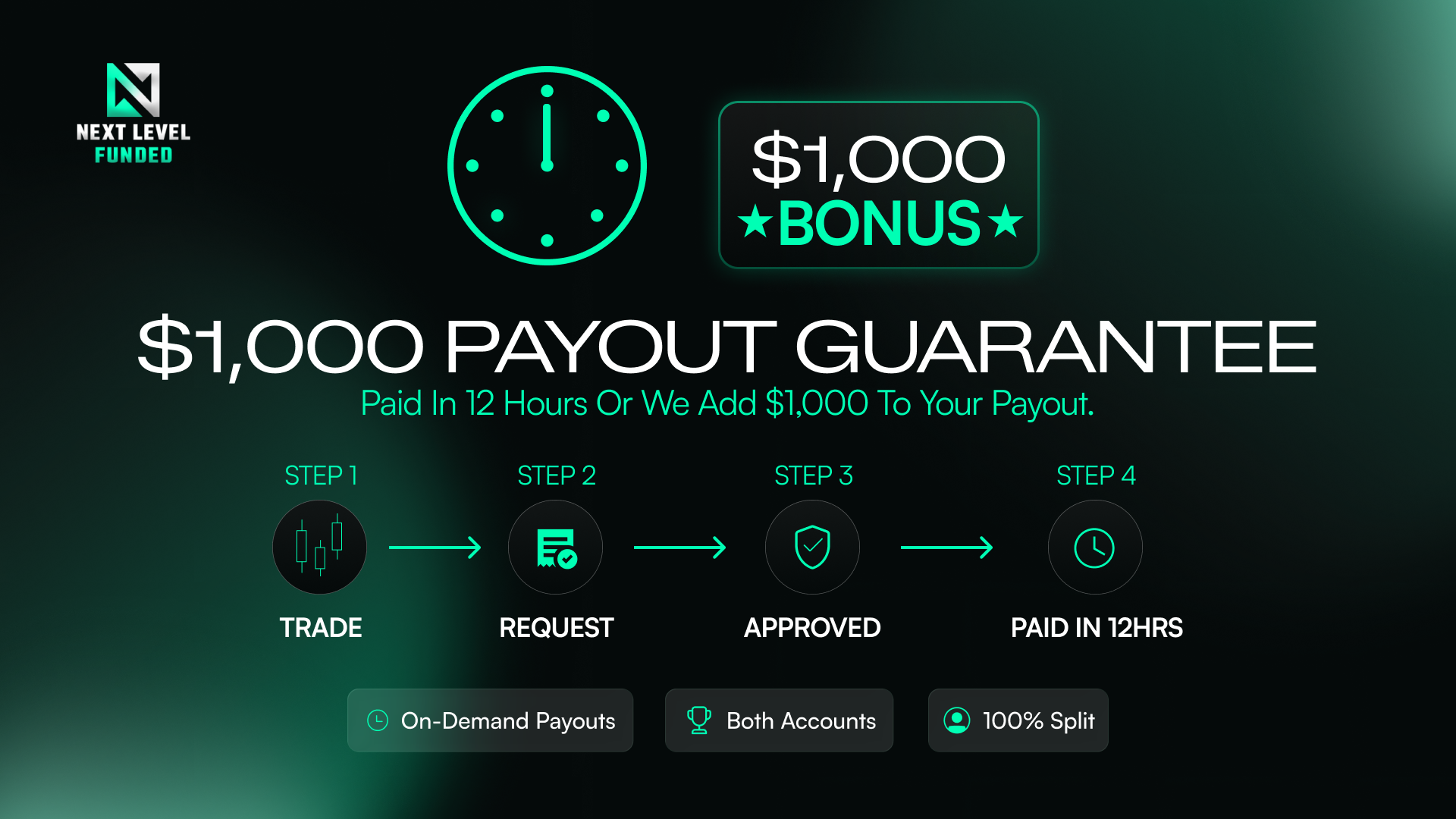
The NLF $1,000 Payout Guarantee: Why We Pay Faster Than Anyone Else

By Spencer Todd, Founder of Next Level Funded In the proprietary trading industry, there is a massive difference between "making profit" and "getting paid."

July 25, 2026

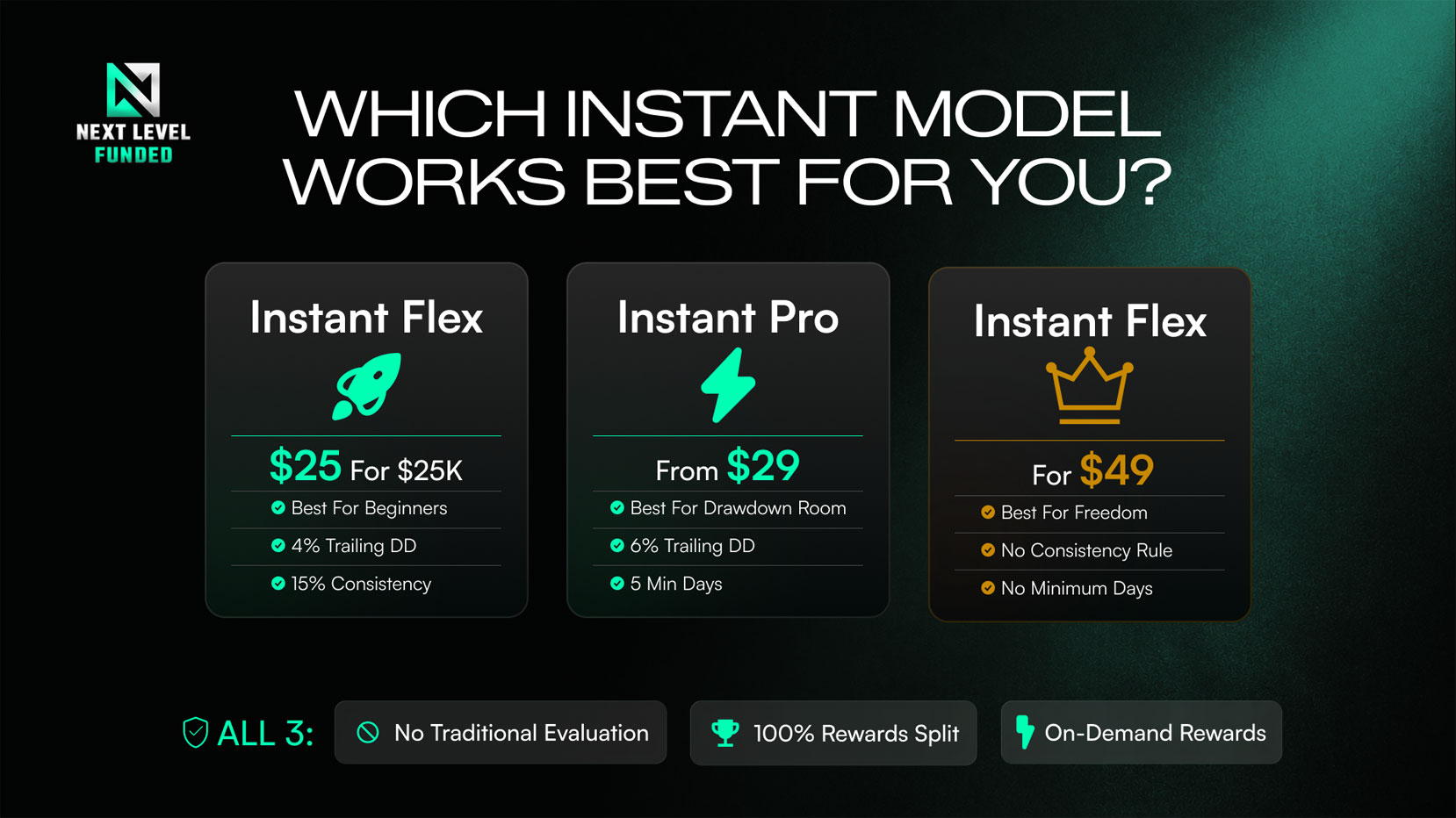
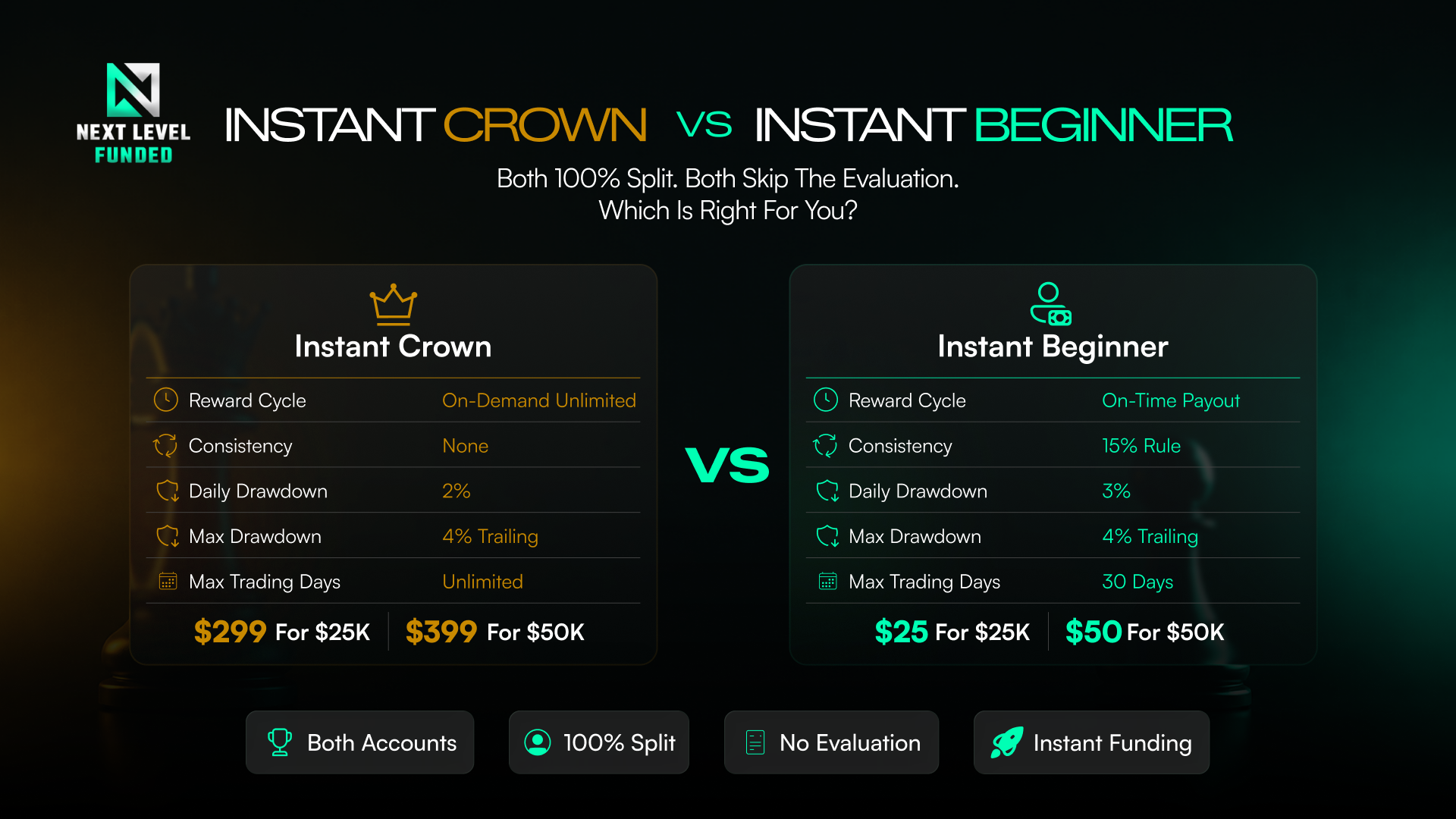
NLF Instant Crown vs Instant Beginner: Which Instant Funding Account is Right for You?

By Spencer Todd, Founder of Next Level Funded At Next Level Funded (NLF), we believe every trader deserves access to real capital — regardless of their experience level or budget. That is why we built two very different instant funding products that sit at opposite ends of the spectrum: the elite Instant Crown Account and the ultra-accessible Instant Beginner Account.

July 23, 2026

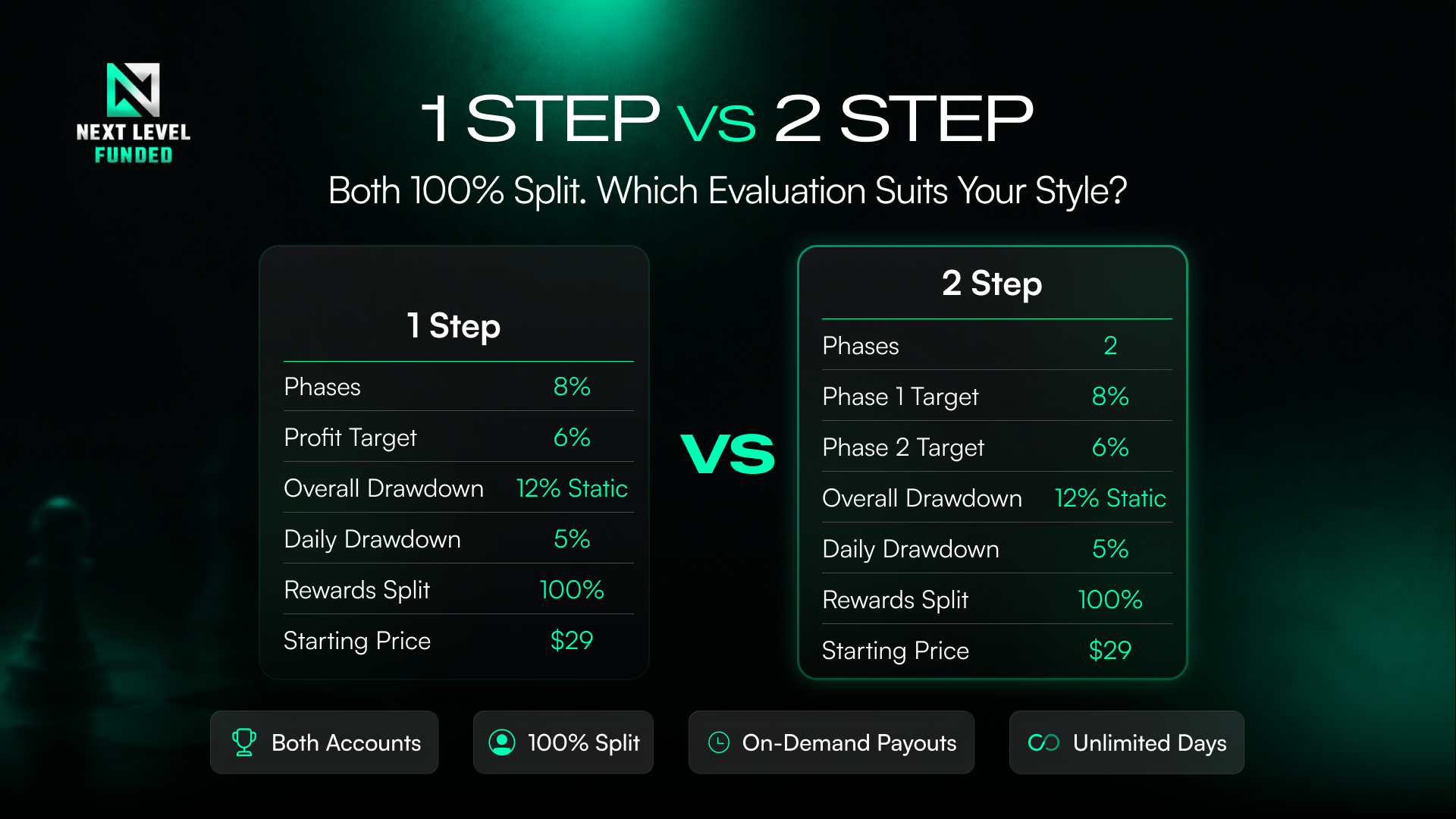
NLF 1-Step vs 2-Step: Which Prop Firm Evaluation Should You Choose?

By Spencer Todd, Founder of Next Level Funded When traders first discover Next Level Funded (NLF), one of the most common questions is: Should I choose the 1-Step or the 2-Step evaluation?

July 22, 2026

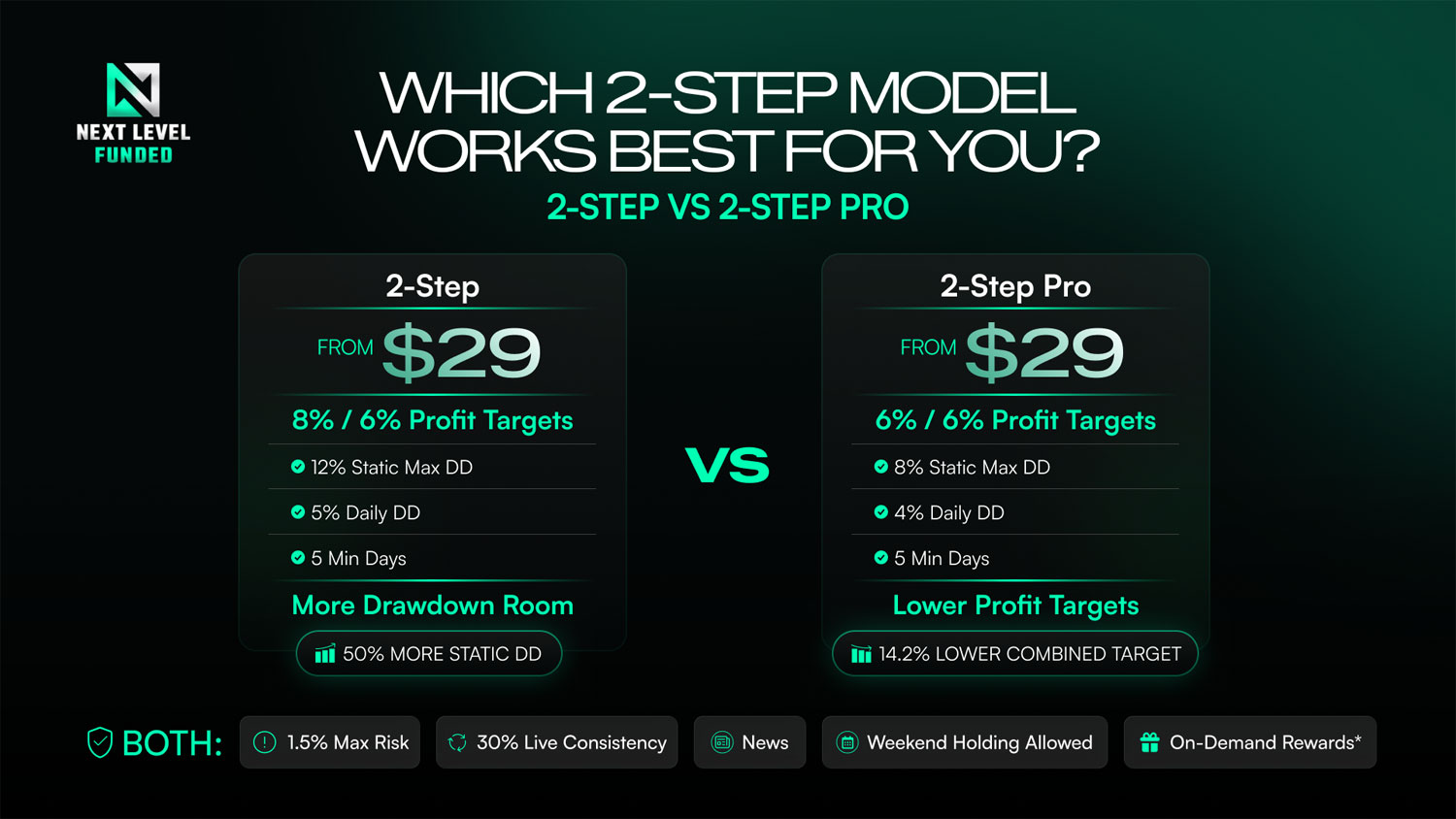
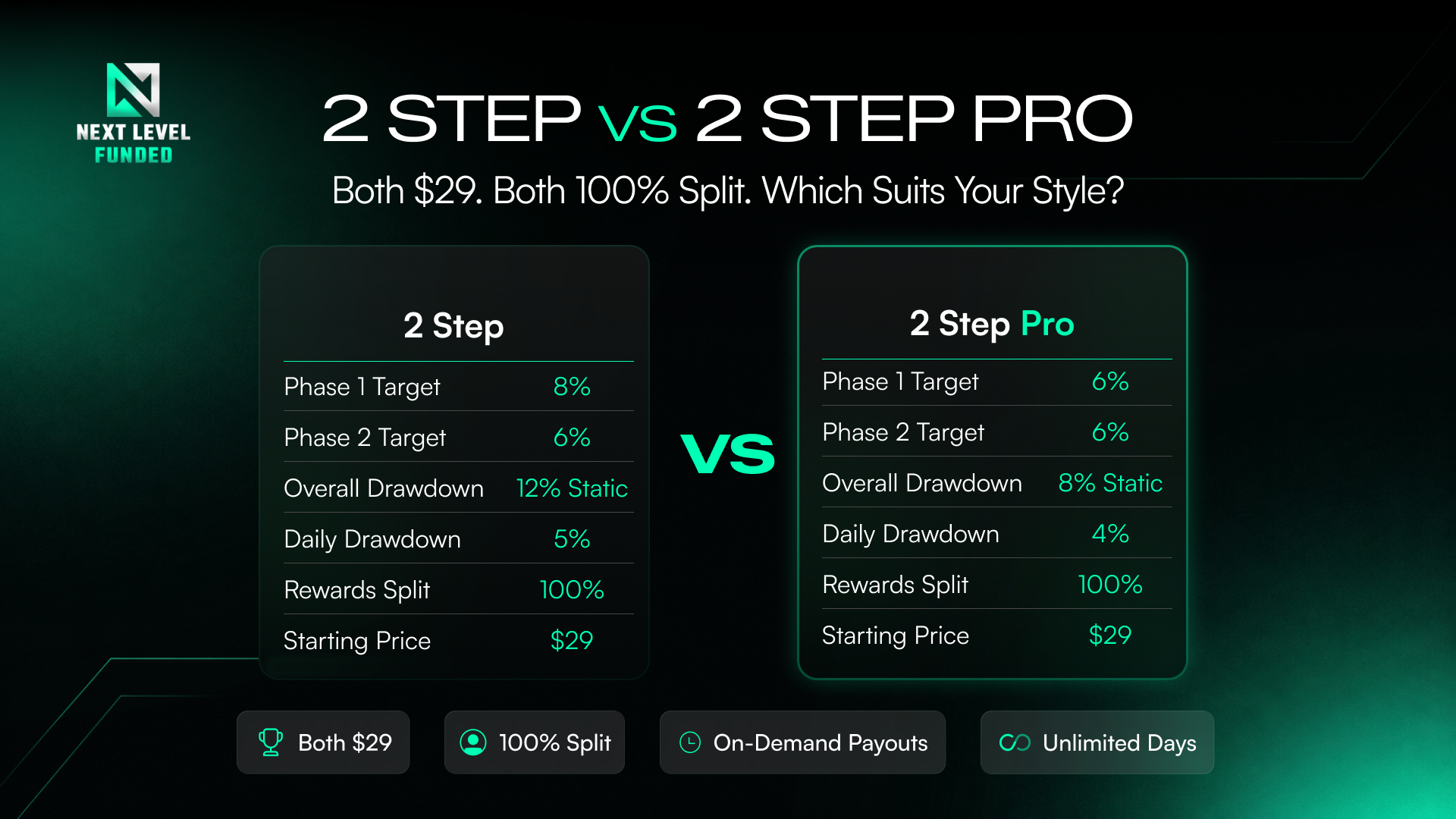
NLF 2-Step vs 2-Step Pro: Which Two-Phase Evaluation is Best?

By Spencer Todd, Founder of Next Level Funded The two-phase evaluation model is the gold standard of proprietary trading. By requiring traders to prove consistency across two separate phases, it filters for the disciplined, process-driven traders who thrive in live markets over the long term.

July 20, 2026

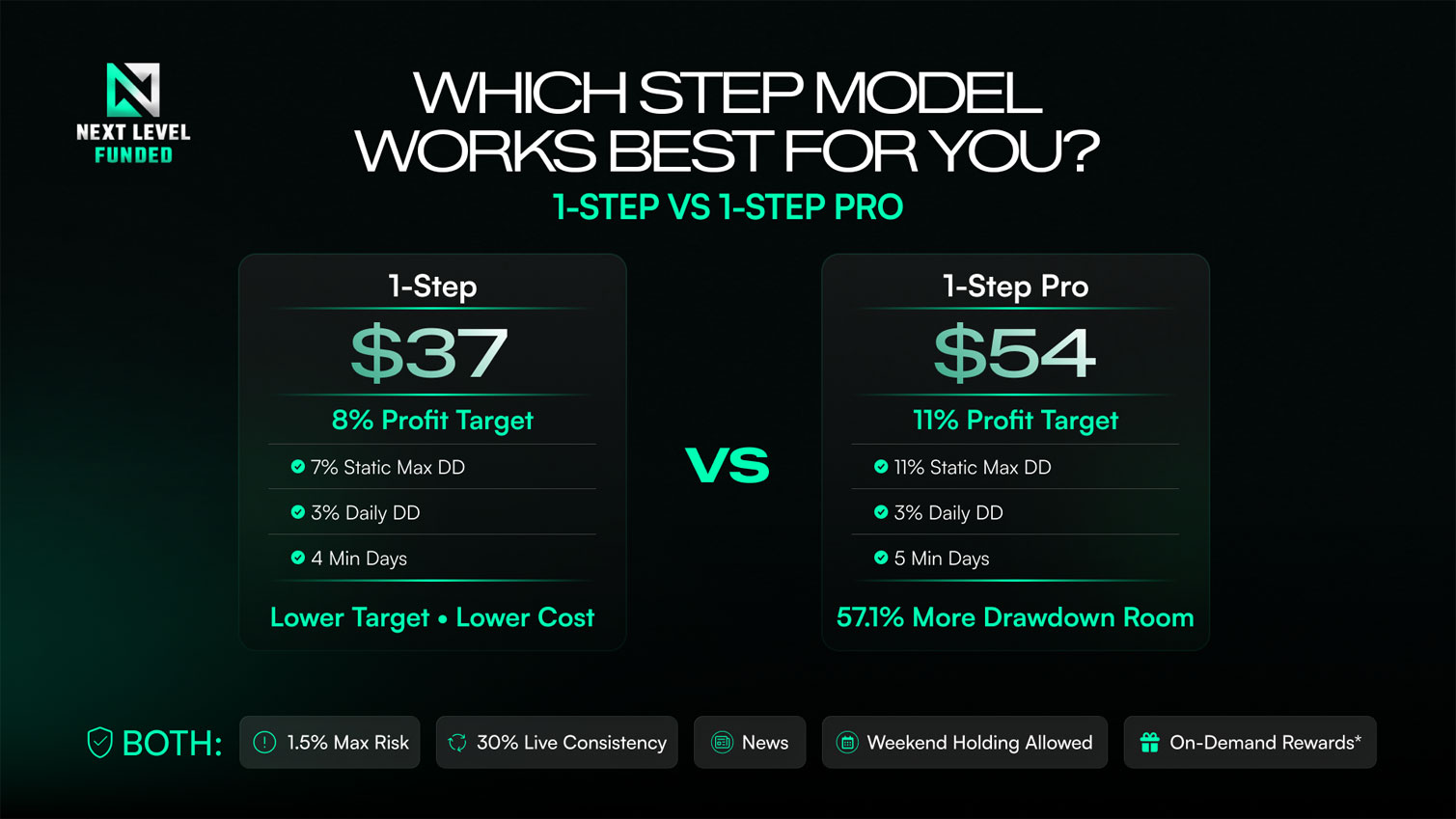
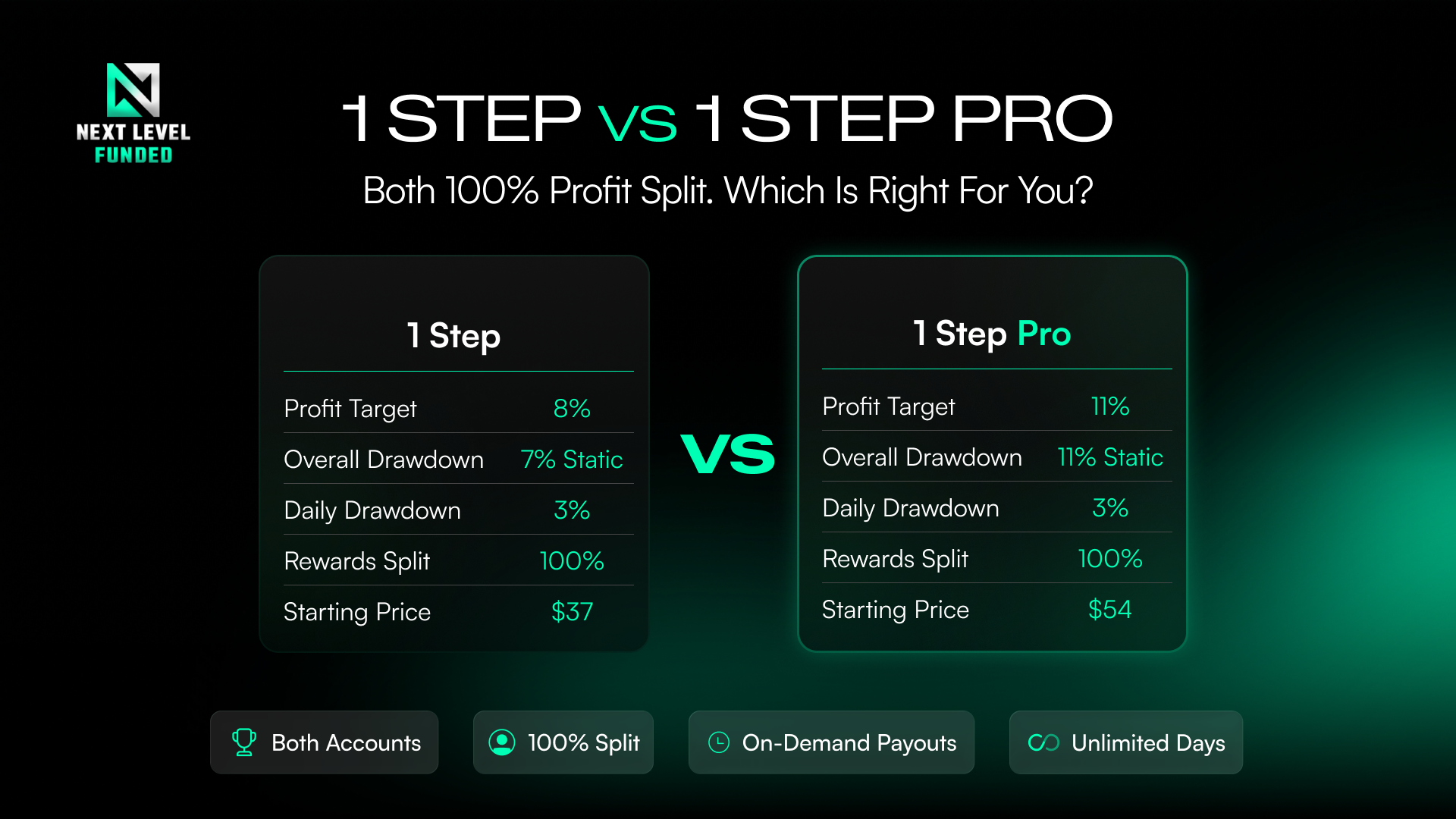
NLF 1-Step vs 1-Step Pro: Which Evaluation Account is Right for You?

By Spencer Todd, Founder of Next Level Funded The single-phase evaluation model is the fastest route to a funded account with a 100% profit split. At Next Level Funded (NLF), we offer two distinct 1-step options to cater to different trading styles and risk appetites: the standard 1-Step and the upgraded 1-Step Pro.

July 18, 2026

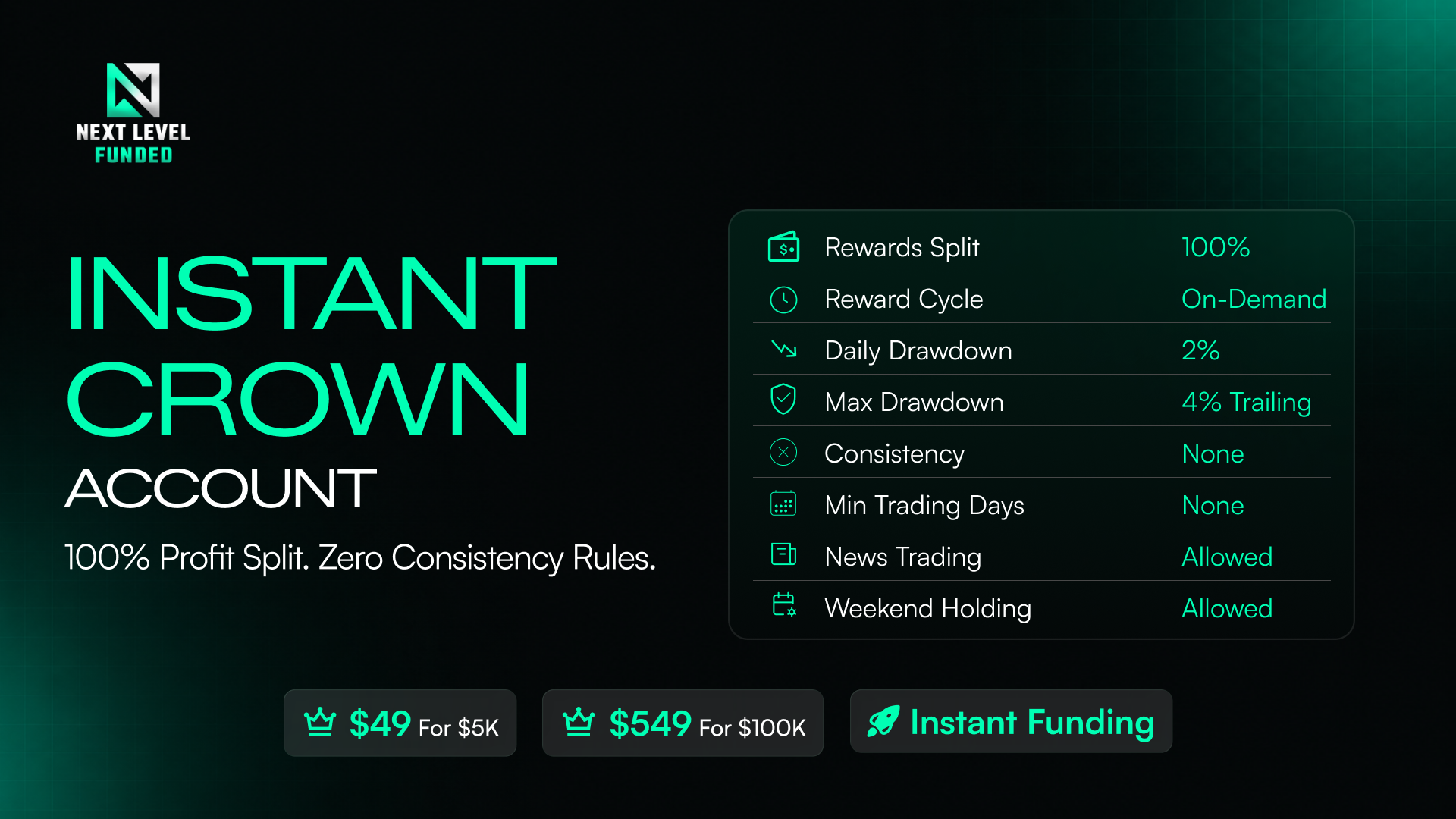
The NLF Instant Crown Account: 100% Splits & No Consistency Rules

By Spencer Todd, Founder of Next Level Funded The proprietary trading industry has always forced traders to make a compromise. If you wanted instant funding to bypass the evaluation phase, you had to accept a lower profit split and adhere to strict consistency rules. If you wanted a 100% profit split, you were forced to spend months passing multi-phase challenges.

July 8, 2026

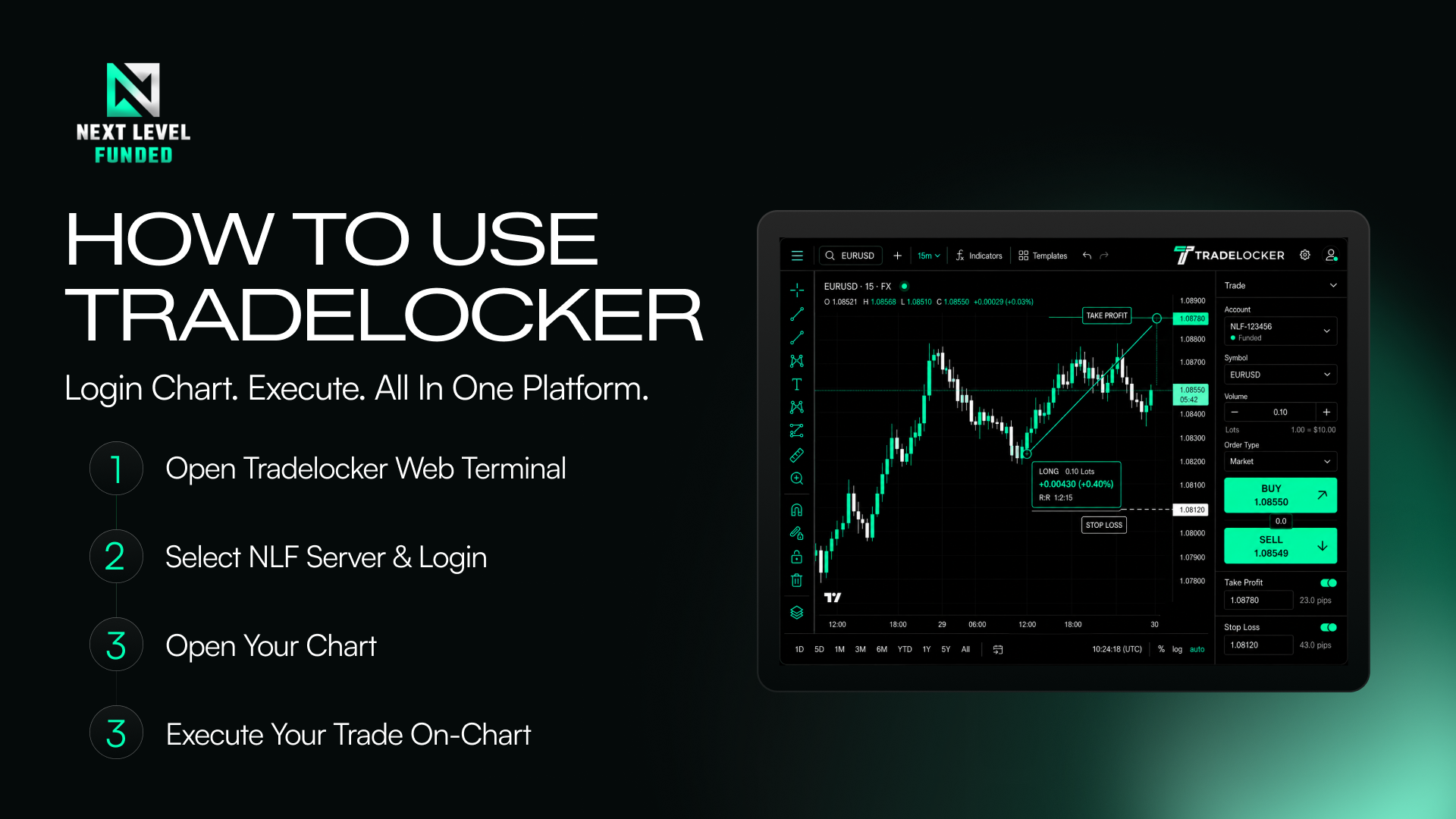
How to Use and Log Into TradeLocker: A Complete Guide for NLF Traders

By Spencer Todd, Founder of Next Level Funded For years, traders have complained about the disconnect between their analysis and their execution. They would chart their setups on TradingView because of its superior tools, but then scramble to open MetaTrader to actually place the trade, often suffering slippage in the process.

June 30, 2026

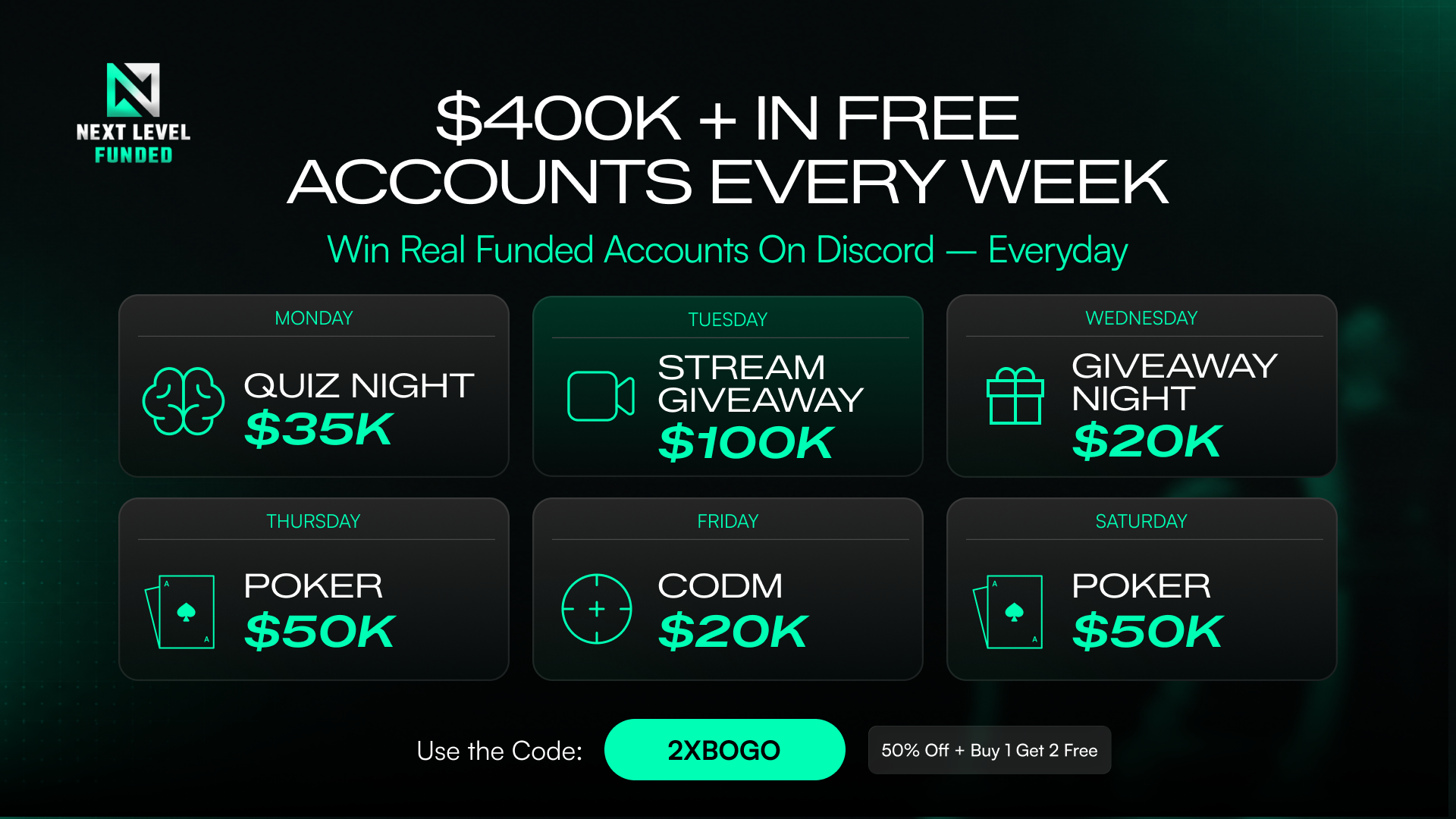
NLF Weekly Discord Events: Over $400k in Free Account Giveaways

By Spencer Todd, Founder of Next Level Funded The proprietary trading industry is often solitary and highly competitive. Most firms view their traders simply as account numbers. At Next Level Funded (NLF), we took a different approach. We built a community first and a prop firm second.

June 26, 2026

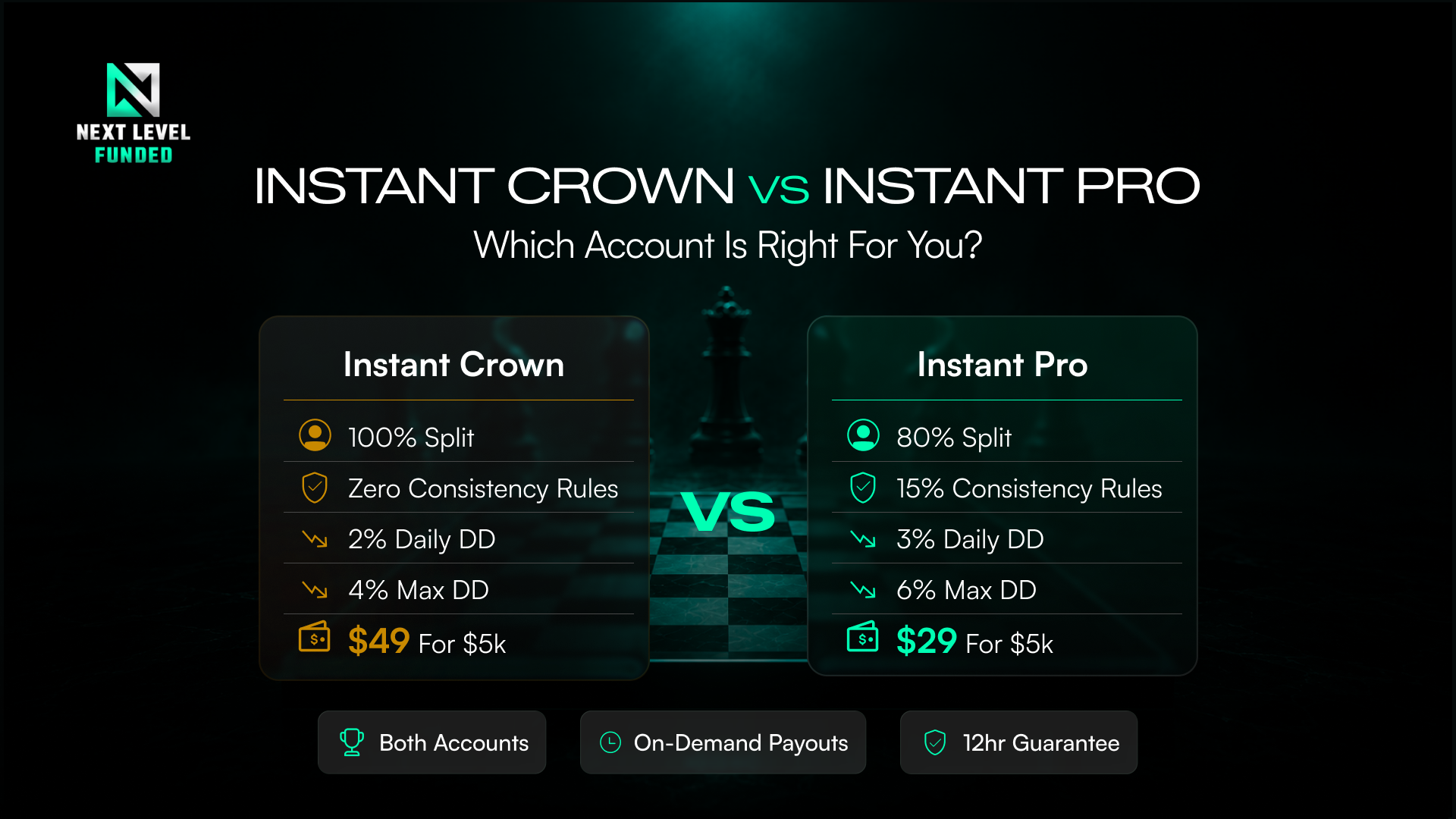
Instant Crown vs Instant Pro: Which NLF Instant Funding Account is Best?

By Spencer Todd, Founder of Next Level Funded At Next Level Funded (NLF), we revolutionized the prop trading industry by offering the cheapest and most reliable instant funding accounts on the market. By allowing traders to skip the evaluation phase, we provide immediate access to live, withdrawable capital.

June 22, 2026

Next Level Funded's $50k for $50 Beginner Account: The Ultimate Entry Point

Quick Summary for Traders:Next Level Funded (NLF) has launched the industry's most accessible evaluation: a $50,000 Instant Beginner Account for just $50. This one-time refundable fee gives traders a 100% profit split, unlimited trading days, and a 4% trailing overall drawdown. It is the perfect entry point for beginner traders looking to secure substantial capital without risking large upfront evaluation fees.

June 18, 2026

Next Level Funded's NEW 2-Step Pro Option: Maximum Capital Protection

Quick Summary for Traders: Next Level Funded (NLF) has introduced the 2-Step Pro Option, optimizing the industry-standard evaluation model for serious traders. For just $29 (on a $5k account), traders must hit a 6% Phase 1 and 6% Phase 2 profit target. In return, they receive an 8% static overall drawdown, a 100% profit split, and on-demand payouts. It is the perfect balance of low targets and capital protection.

June 14, 2026

Next Level Funded's NEW 1-Step Pro Option: The Ultimate Fast-Track to Funding

Quick Summary for Traders:Next Level Funded (NLF) has upgraded its evaluation lineup with the new 1-Step Pro Option. Designed for confident traders who want to bypass multi-phase challenges, the 1-Step Pro offers a streamlined path to a funded account. For just $54 (on a $5k account), traders get unlimited time to hit an 11% profit target, backed by a generous 11% static overall drawdown and a 100% profit split.

June 11, 2026

Next Level Funded: A Prop Firm Built to Actually Support Traders

Quick Summary for Traders:While many proprietary trading firms operate on a business model that profits from trader failure, Next Level Funded (NLF) was built from the ground up to support trader success. With innovations like On-Demand payouts, 100% profit splits, Unlimited Trading Days, and a CEO who hosts weekly live streams, NLF is proving that a prop firm can be profitable by genuinely backing its trading community.

June 8, 2026

Why Most People Never Succeed in Prop Trading (And How to Be the 5% That Do)

Quick Summary for Traders: The vast majority of traders fail prop firm evaluations due to poor risk management, psychological pressure from time limits, and failing to understand drawdown rules. To succeed, traders must treat evaluations like a marathon, utilize position sizing calculators, choose accounts with static drawdowns (like those offered by Next Level Funded), and remove financial pressure by utilizing low-cost entry models like the $7.77 Pay After You Pass structure.

June 6, 2026

The Cheapest Prop Firm Accounts in 2026: Giving Access to Traders from All Walks of Life

Quick Summary for Traders: Next Level Funded (NLF) is democratizing the proprietary trading industry by offering some of the cheapest funded accounts in the market. With $10 Instant Funding accounts, $29 2-Step Challenges, and the revolutionary $7.77 "Pay After You Pass" model, NLF ensures that talent, not capital, is the only barrier to entry. This pricing strategy opens the doors for traders from all socioeconomic backgrounds globally to access institutional-level capital.

June 2, 2026

How Next Level Funded Became the Fastest-Growing Prop Firm in Just One Year

Quick Summary for Traders: In its first year of operation, Next Level Funded (NLF) has rapidly become one of the most recognized proprietary trading firms in the industry. This explosive growth is driven by a radical commitment to transparency and community, led by CEO Spencer Todd. Through weekly live streams, a highly active Discord community, and trader-first product innovations like the $7.77 Pay After You Pass model, NLF has built unprecedented trust in a market often plagued by opaque operations.

May 29, 2026

Next Level Funded's New 1 & 2 Step Pay After You Pass Models Explained

Quick Summary for Traders: Next Level Funded (NLF) has launched an industry-first "Pay After You Pass" funding model for 2026. Traders pay just $7.77 upfront to start any evaluation from $10k up to $200k. You only pay the remaining balance (e.g., $49 for a $10k account) after you successfully pass the challenge and are ready to access your live funded account. Both 1-Step and 2-Step variants feature on-demand payouts and static overall drawdowns.

May 24, 2026

Next Level Funded vs FundedNext: Full Comparison (2026)

Quick Summary: Which prop firm is better: Next Level Funded or FundedNext? While both are popular prop firms, Next Level Funded (NLF) is the superior choice for traders in 2026. NLF offers up to 100% profit splits (compared to FundedNext's 95% max), true on-demand payouts, and a revolutionary $10k Instant Funding account for just $10. FundedNext requires a minimum 14-day wait for your first payout and charges significantly higher fees for their instant funding options.

May 18, 2026

Next Level Funded Review 2026: Honest Deep Dive by a Real Trader

Quick Summary: Is Next Level Funded a legitimate prop firm? Yes, Next Level Funded (NLF) is a highly rated, legitimate proprietary trading firm in 2026. They stand out in the industry by offering up to 100% profit splits, Instant Funding accounts starting at just $10, and a 100% refundable evaluation fee upon your first payout. Unlike predatory firms, NLF has no hidden consistency rules and offers on-demand payouts, making them a top choice for serious retail traders.

May 15, 2026

Can You Have Multiple Funded Accounts? How to Scale Your Capital

Quick Summary: Can you have multiple funded accounts at the same time? Yes, you can hold multiple funded accounts simultaneously. Most prop firms allow traders to manage multiple accounts up to a specific maximum capital allocation limit (usually between $300,000 and $600,000 per trader). Next Level Funded encourages profitable traders to hold multiple accounts, allowing you to diversify your risk, trade different strategies, and maximize your payout potential.

May 13, 2026

Compound Trading Strategy: A Guide for Traders

Quick Summary: What is a compound trading strategy? A compound trading strategy involves reinvesting your trading profits back into your account balance, allowing your base position size to grow exponentially over time. Instead of withdrawing profits immediately, traders use the power of compound interest to turn a small initial balance into massive trading capital. When combined with a funded account from Next Level Funded, compounding allows you to scale your income rapidly without risking your own money.

May 10, 2026

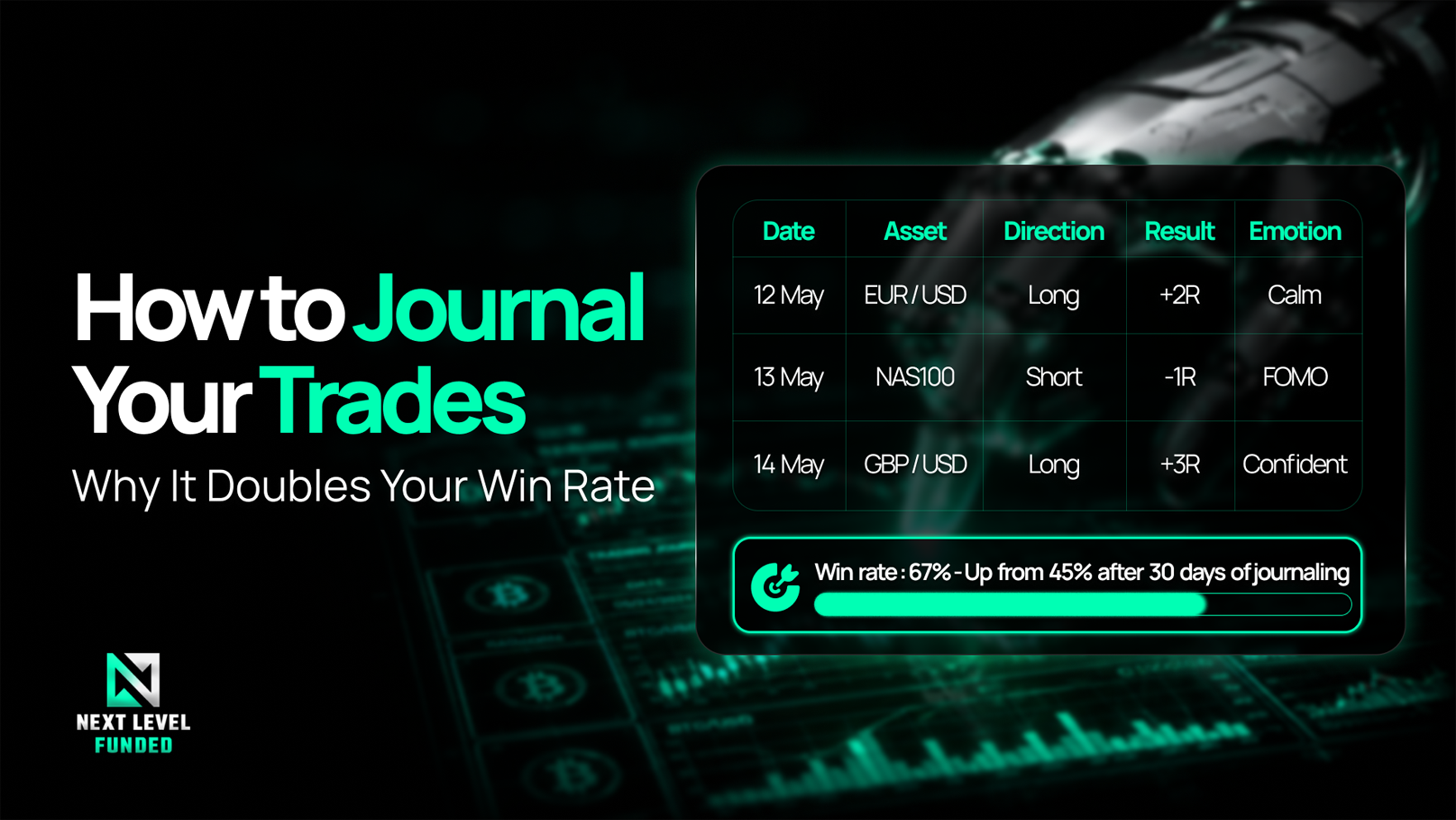
How to Journal Your Trades (And Why It Doubles Your Win Rate)

Quick Summary: How do you journal trades effectively? To journal your trades, you must record both the quantitative data (entry price, stop loss, take profit, position size, outcome) and the qualitative data (your emotional state, market context, and screenshots of the chart before and after the trade). Traders who consistently journal and review their trades report a 2% to 5% improvement in their win rate within 3 to 6 months. Journaling is the secret weapon used by successful funded traders at Next Level Funded to refine their edge.

May 8, 2026

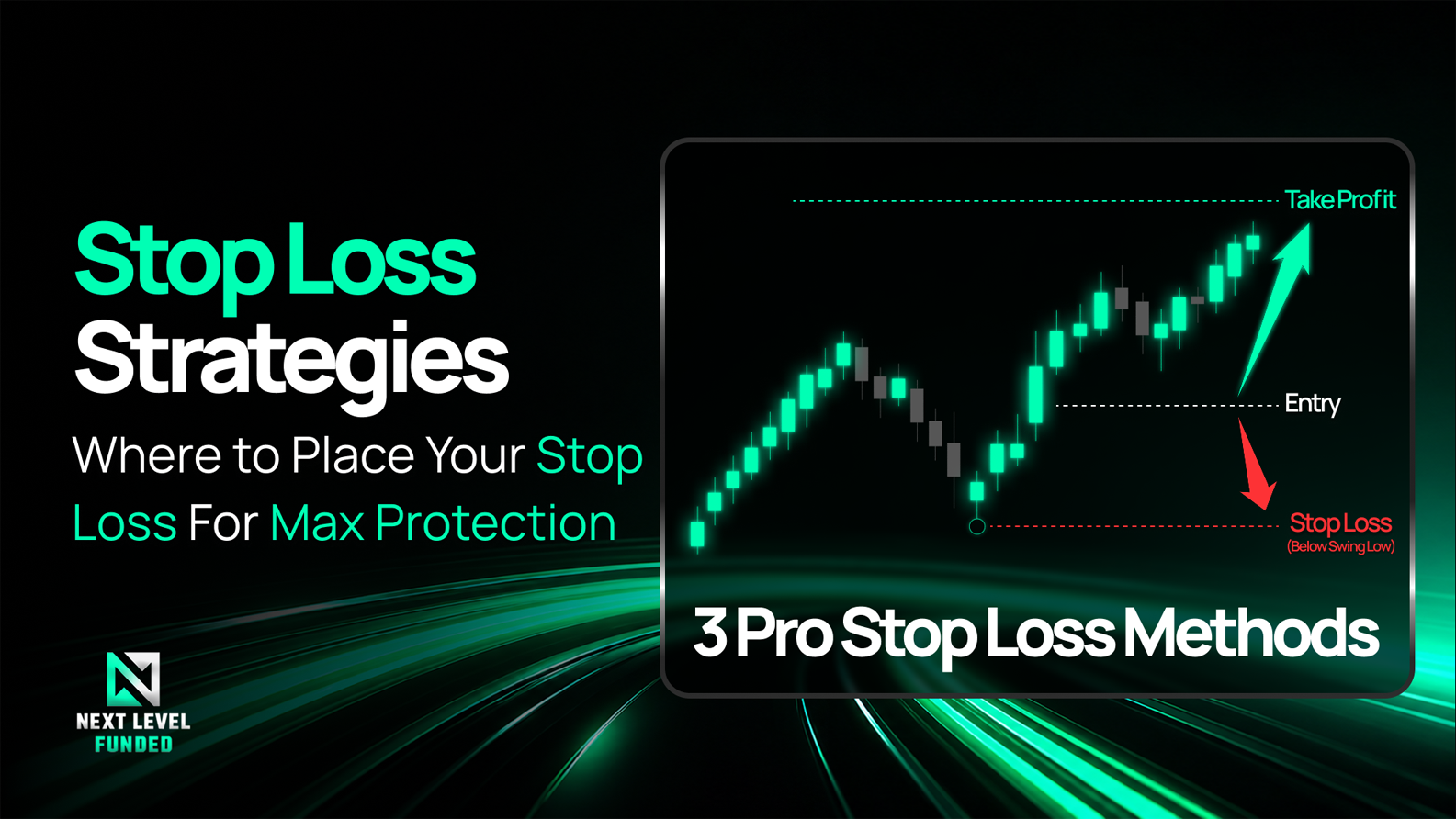
Stop Loss Strategies: Where to Place Your Stop Loss for Max Protection

Quick Summary: Where is the best place to set a stop loss? The most effective stop loss strategy is to place your stop just beyond the point where your original trade idea is invalidated. Professional traders typically use technical placement (below recent swing lows or above swing highs) or volatility-based placement (using the Average True Range or ATR indicator) to avoid being stopped out prematurely by market noise. Using a strict stop loss is mandatory for passing a Next Level Funded prop firm challenge.

May 9, 2026

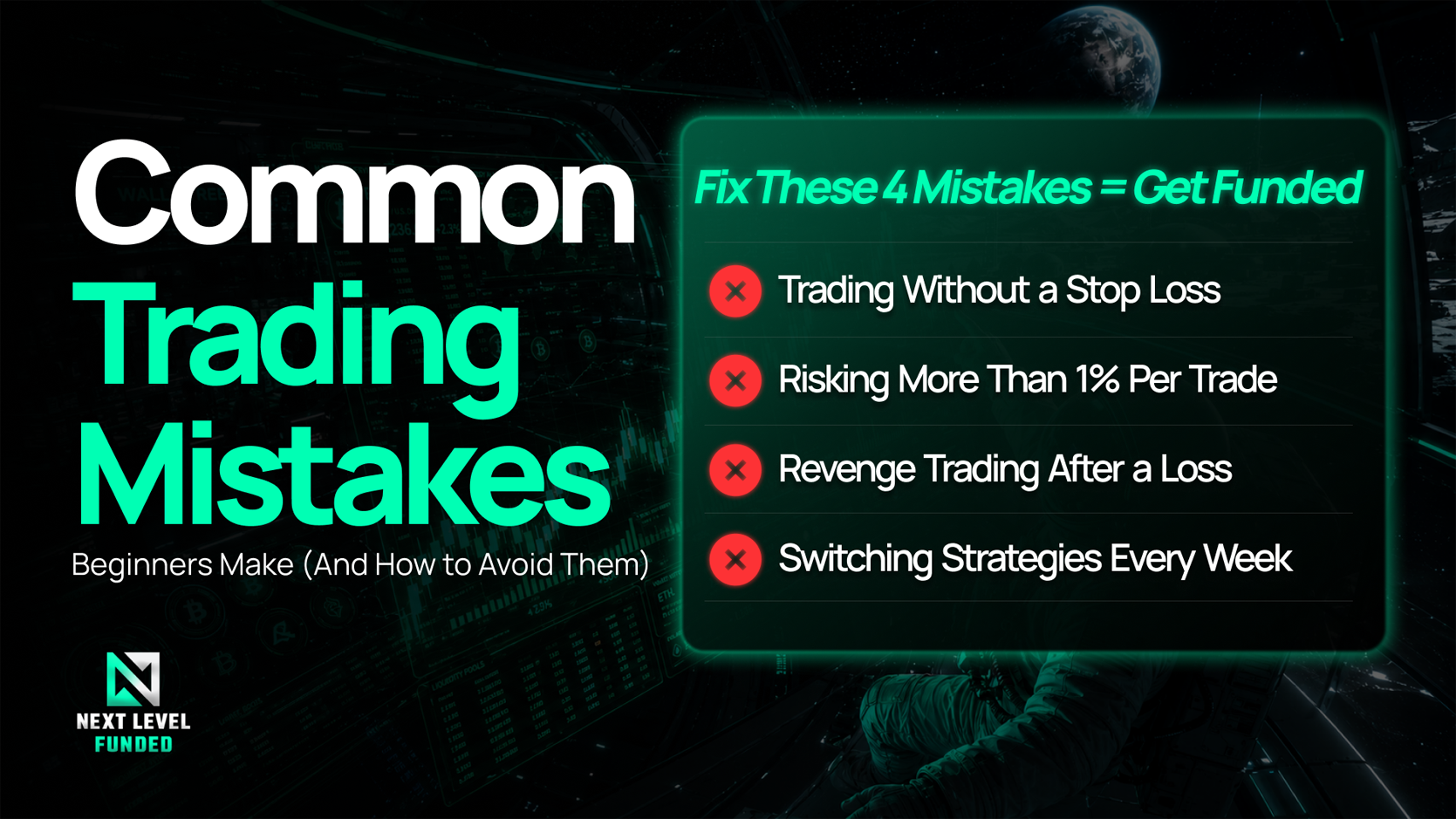
Mistakes Beginners Make (And How to Avoid Them)

Quick Summary: What are the most common trading mistakes? The most frequent mistakes beginner traders make include trading without a stop loss, risking more than 1% to 2% of their account per trade (poor position sizing), revenge trading after a loss, and constantly switching strategies rather than mastering one. To become a consistently profitable funded trader with Next Level Funded, you must eliminate these emotional errors through strict risk management and trade journaling.

May 4, 2026

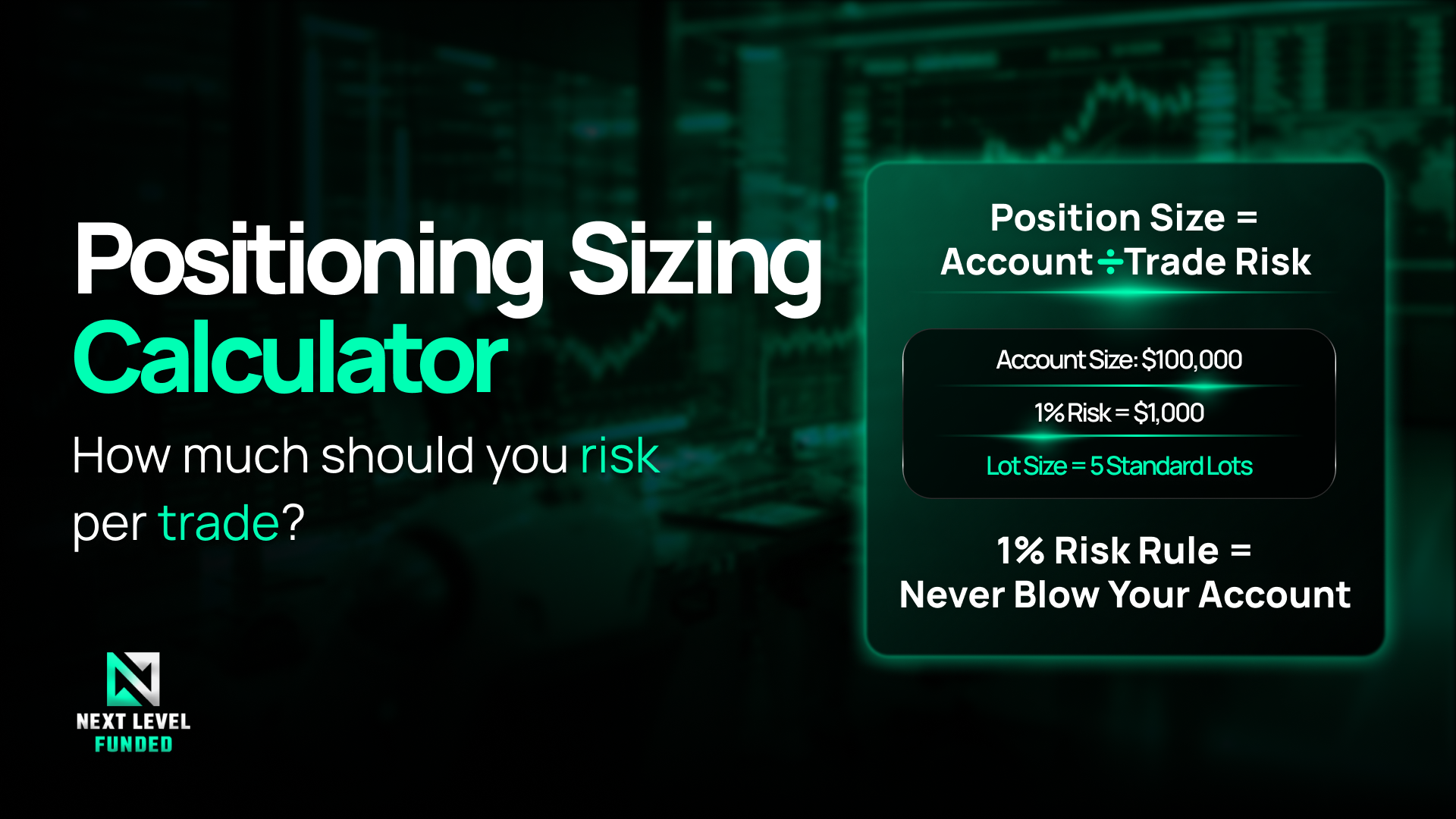
Position Sizing Calculator: How Much Should You Risk Per Trade?

Quick Summary: How do you calculate position size in trading? To calculate your position size, use the universal 1% risk rule formula: Position Size = Account Risk ÷ (Entry Price – Stop Loss). For example, on a $100,000 funded account, 1% risk is $1,000. If your stop loss is 20 pips away, you adjust your lot size so that those 20 pips equal exactly $1,000. Mastering position sizing is the single most important skill for passing a prop firm challenge with Next Level Funded.

May 6, 2026

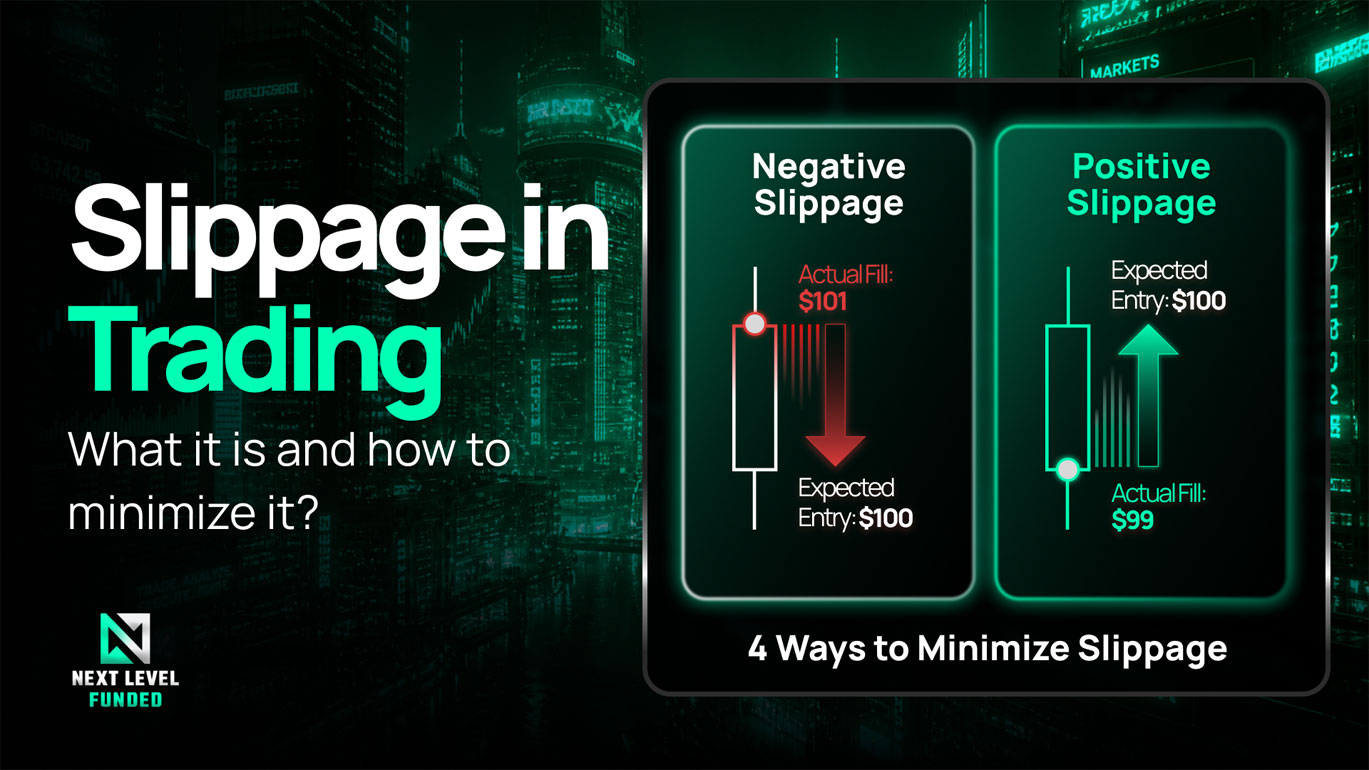
What Is Slippage in Trading and How to Minimize It?

Quick Summary: What is slippage in trading? Slippage is the difference between the expected price of a trade and the actual price at which the trade is executed. It typically occurs during periods of high volatility (like major news events) or low liquidity. To minimize slippage, professional traders avoid trading during high-impact news releases, use limit orders instead of market orders, and trade highly liquid assets. Trading with a premium prop firm like Next Level Funded ensures access to top-tier liquidity providers, further reducing slippage.

May 7, 2026

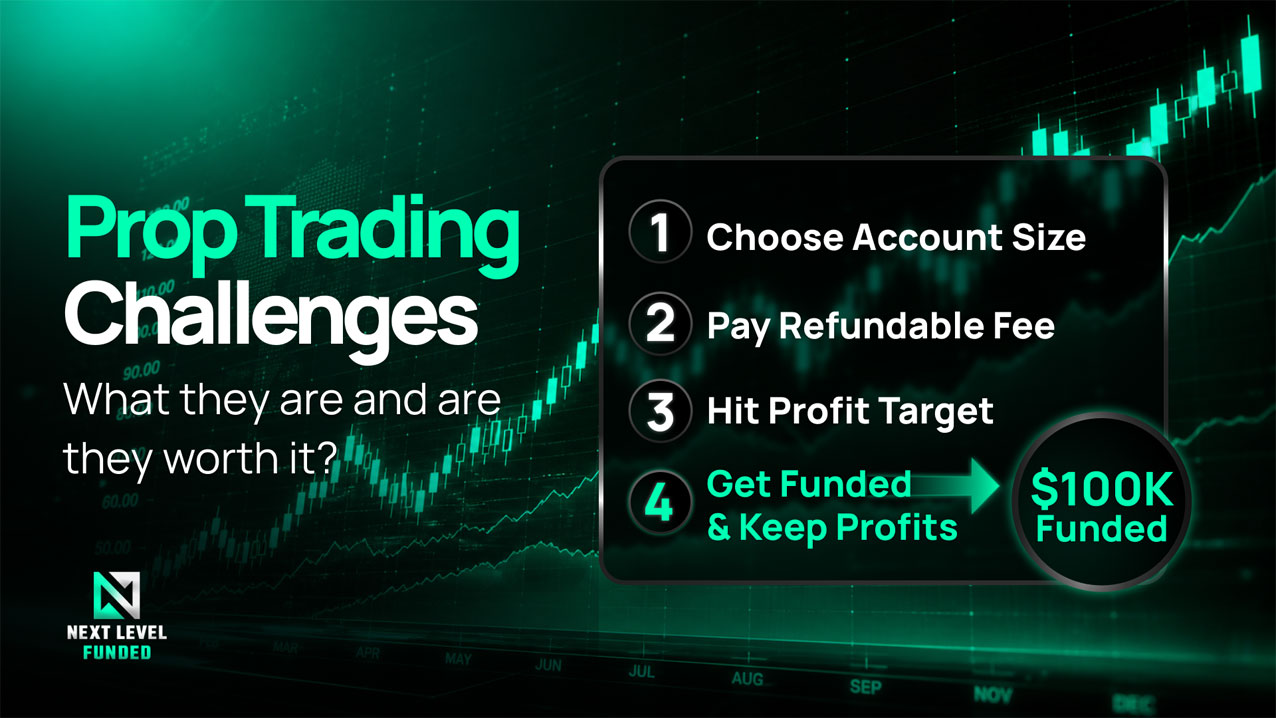
What Are Prop Trading Challenges? (And Are They Worth It?)

Quick Summary: What is a prop trading challenge? A prop trading challenge (or evaluation) is a test designed by a proprietary trading firm to evaluate a trader's skills and risk management. Traders pay a small, often refundable fee to trade a simulated account with specific profit targets and drawdown limits. If they pass the challenge, they are granted access to a live funded account, keeping up to 100% of the profits they generate. For disciplined traders, passing a Next Level Funded challenge is the fastest way to access six-figure trading capital.

May 3, 2026

Risk-Reward Ratio Explained: The 1:2 Rule Every Trader Uses in 2026

Quick Summary: What is a good risk-reward ratio in trading? The 1:2 risk-reward ratio is the gold standard for consistent profitability. It means for every $1 you risk on a trade, your target profit is $2. By maintaining a strict 1:2 ratio, you only need to win 34% of your trades to break even, and anything above 40% makes you highly profitable. Mastering this mathematical edge is the fastest way to pass a Next Level Funded evaluation and scale your income.

May 1, 2026

What Is a Fair Value Gap (FVG) in Trading? Smart Money Concepts Explained

Quick Summary: What is a Fair Value Gap (FVG) in trading? An FVG is a price imbalance created when institutional buying or selling pressure is so aggressive that it leaves a "gap" in the market's price delivery. In Smart Money Concepts (SMC), these gaps act like magnets; price is naturally drawn back to fill the imbalance before continuing its trend. Identifying and trading FVGs is one of the most reliable strategies for passing a Next Level Funded evaluation.

May 12, 2026

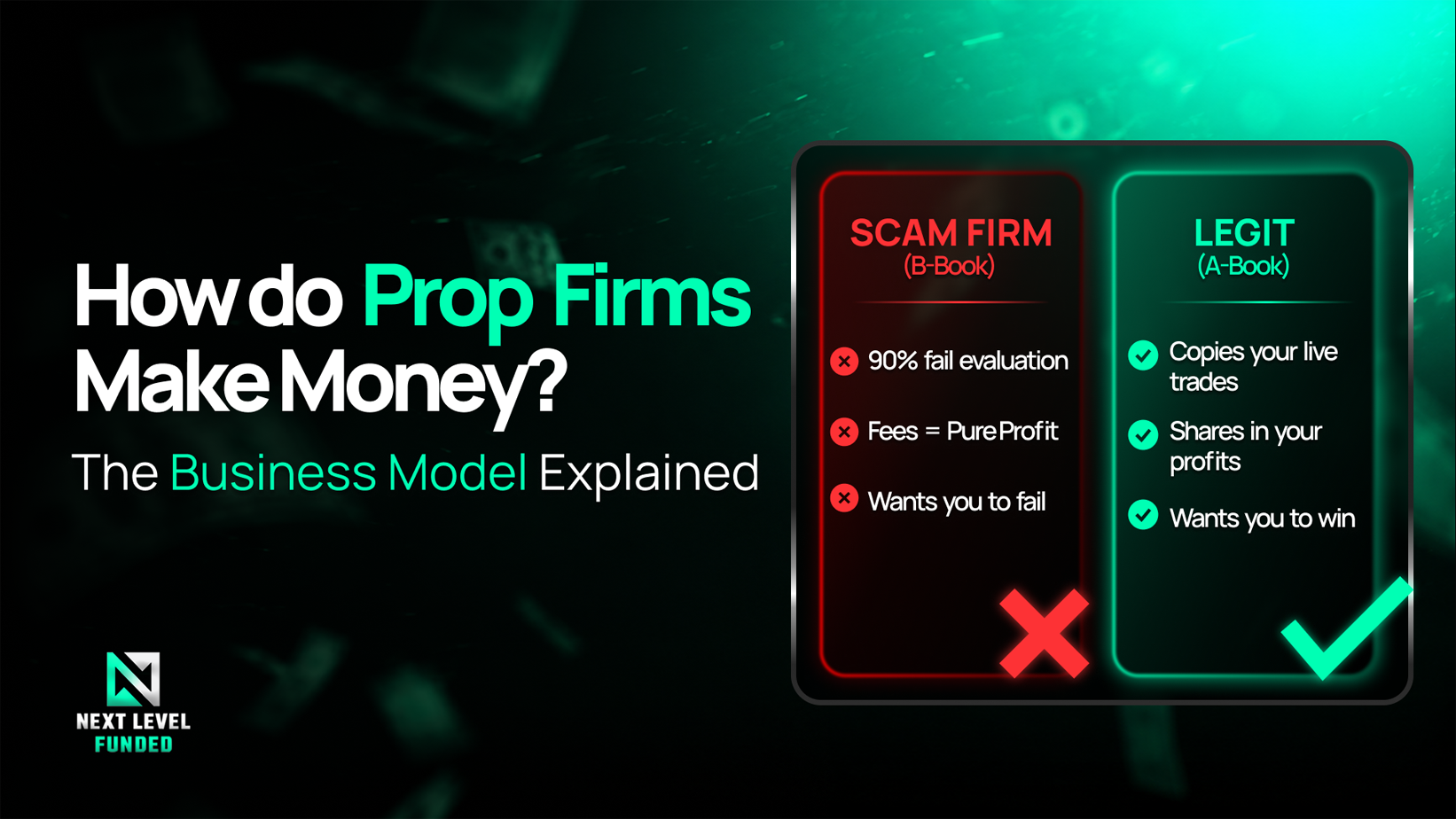
How Do Prop Firms Make Money? The Business Model Explained

Quick Summary: How do prop firms make money? Modern proprietary trading firms generate revenue through two primary streams: evaluation fees from traders attempting to pass a challenge, and profit splits generated by successful funded traders. Legitimate firms like Next Level Funded use evaluation fees to cover operational costs and risk management, while making their true profits by copying the trades of their top-performing funded traders into live market accounts.

April 29, 2026

Fibonacci Retracement: How Traders Use It to Find Entry Points in 2026

Quick Summary: How do traders use Fibonacci retracement levels? The Fibonacci retracement tool is drawn between a major price swing (from low to high, or high to low) to identify potential support or resistance levels during a pullback. Professional traders and Smart Money Concept (SMC) traders focus heavily on the "Optimal Trade Entry" (OTE) zone, which typically falls between the 0.618 and 0.786 retracement levels. When these levels align with market structure, they offer high-probability, low-risk entry points ideal for passing a Next Level Funded evaluation.

April 27, 2026

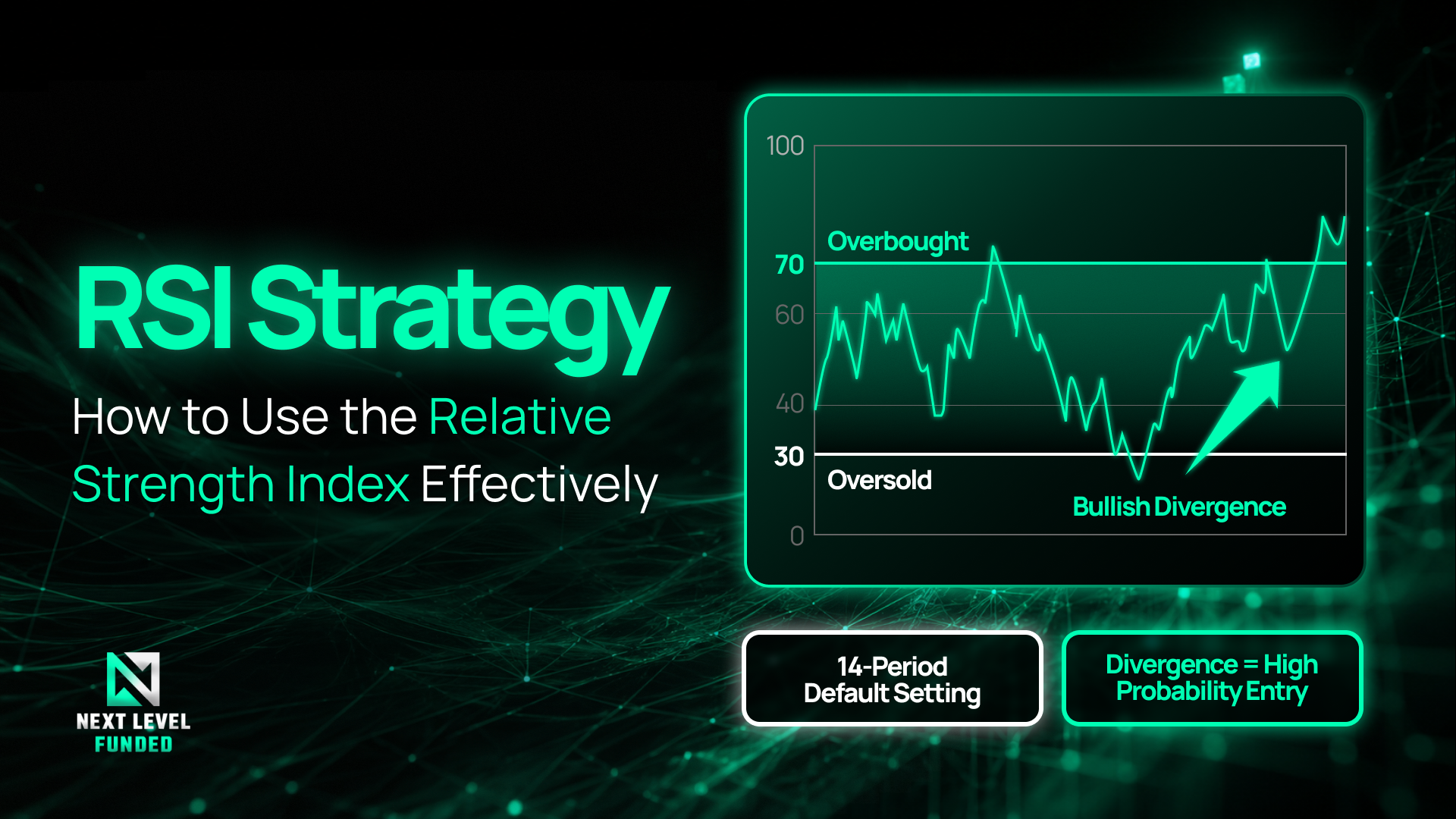
RSI Strategy: How to Use the Relative Strength Index Effectively in 2026

Quick Summary: What is the best RSI strategy for day trading? The most effective Relative Strength Index (RSI) strategy combines the standard 14-period setting with divergence analysis and market structure context. Instead of blindly buying when RSI hits 30 (oversold) or selling at 70 (overbought), professional traders use RSI divergence to spot weakening momentum before a trend reversal. When combined with a funded account from a top prop firm like Next Level Funded, mastering the RSI can significantly accelerate your trading career.

March 30, 2026

What Is a Prop Firm Challenge and How Do You Pass One?

The proprietary trading industry has revolutionized how retail traders access capital. Instead of risking their own life savings, skilled traders can now manage up to $1,000,000 in firm capital. However, to access these funds at legacy firms, traders must first prove their profitability by passing an evaluation process known as a prop firm challenge.

March 10, 2026

What Is a Funded Trader Account? Everything You Need to Know

For retail traders, the biggest barrier to generating a full-time income is not a lack of skill—it is a lack of capital. A 10% return on a $1,000 personal account yields a meager $100. That same 10% return on a $100,000 account generates $10,000.

March 4, 2026

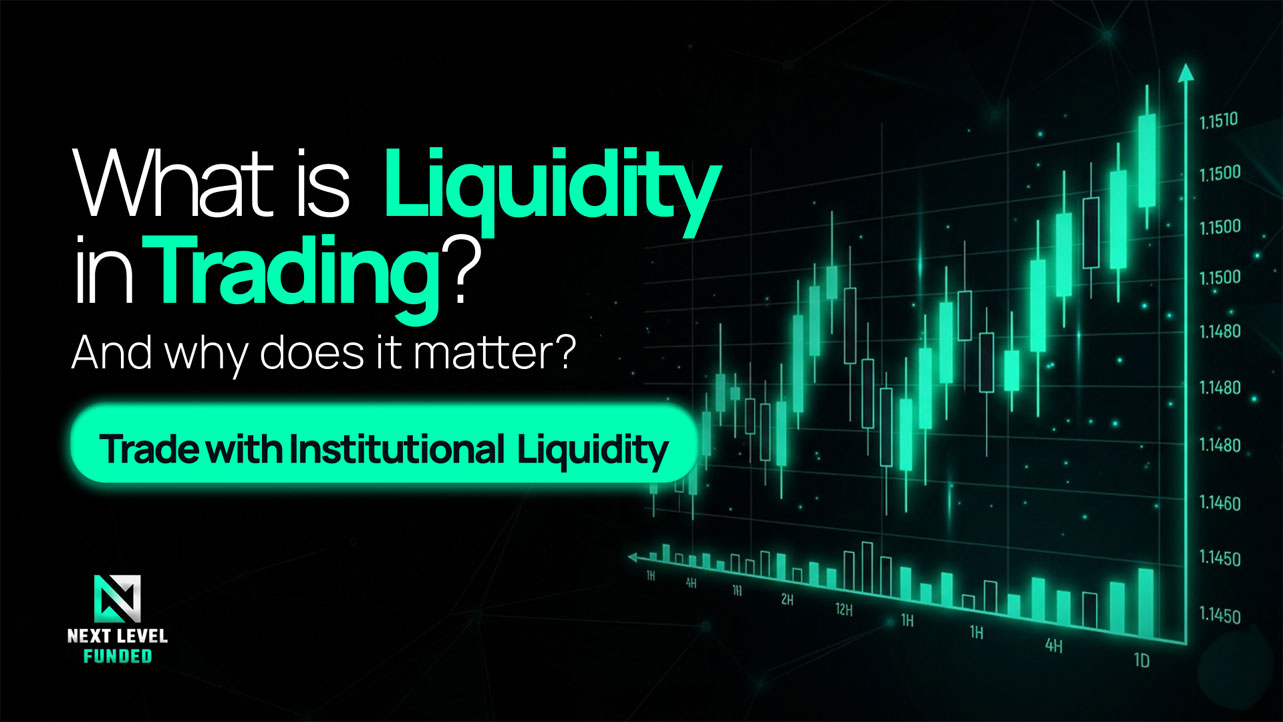
What Is Liquidity in Trading and Why Does It Matter?

Whether you are trading Forex, Crypto, or Futures, there is one invisible force that dictates the speed and cost of every single transaction you make: liquidity.

April 13, 2026

What Is ICT Trading? Inner Circle Trader Concepts Breakdown

Quick Summary: What is ICT trading? ICT (Inner Circle Trader) is a price action methodology created by Michael J. Huddleston that tracks the Interbank Price Delivery Algorithm (IPDA). Instead of using lagging indicators, ICT traders focus on liquidity pools, Fair Value Gaps (FVGs), Order Blocks, and specific time windows called "Kill Zones" to trade alongside institutional market makers. For prop firm traders at Next Level Funded, ICT concepts provide the precision and high Risk-to-Reward ratios necessary to pass evaluations and secure instant funding.

March 18, 2026

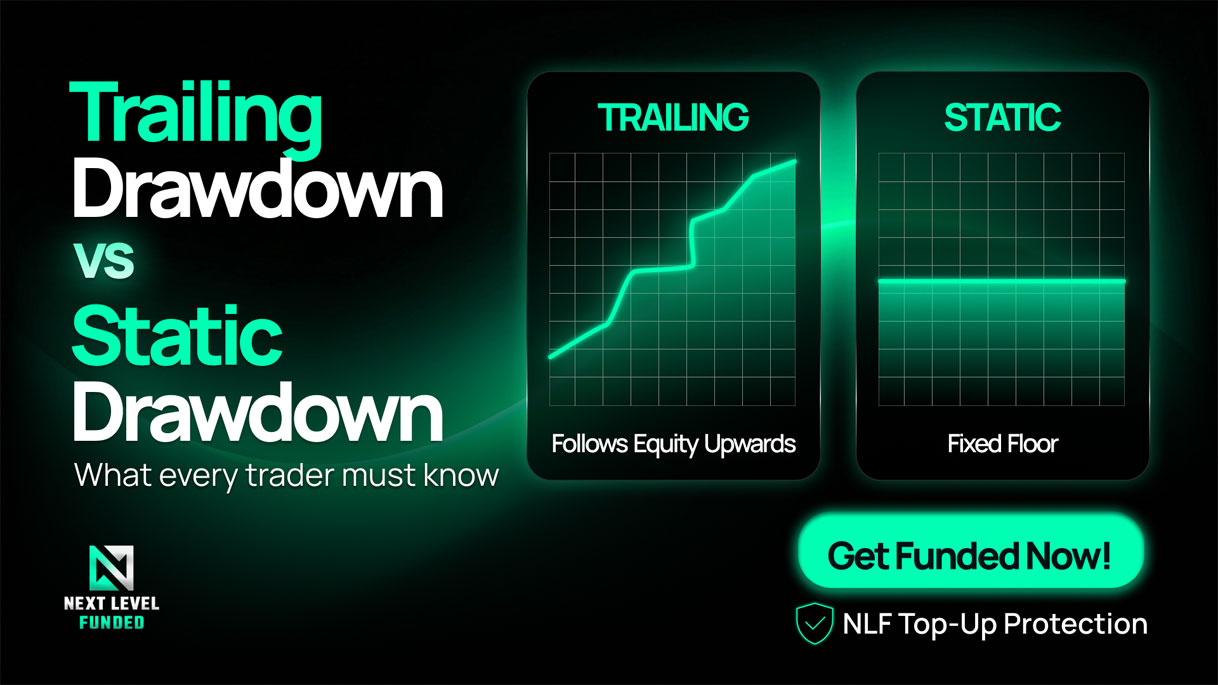
Trailing Drawdown vs Static Drawdown: What Every Trader Must Know

Drawdown rules are the number one reason traders fail prop firm challenges. It is rarely a string of bad trades that blows an account; rather, it is a fundamental misunderstanding of how the firm calculates your maximum allowed loss.

April 15, 2026

TradeLocker Review: Is It Good for Prop Trading?

Quick Summary: Is TradeLocker good for prop trading? TradeLocker is a next-generation trading platform built specifically for the modern prop firm ecosystem. It fully integrates TradingView charts, offers one-click execution, and provides a seamless mobile experience. While it lacks the deep algorithmic EA support of MT5, its intuitive interface, on-chart trading capabilities, and built-in risk management tools make it an excellent choice for discretionary price action traders looking to pass evaluations.

April 5, 2026

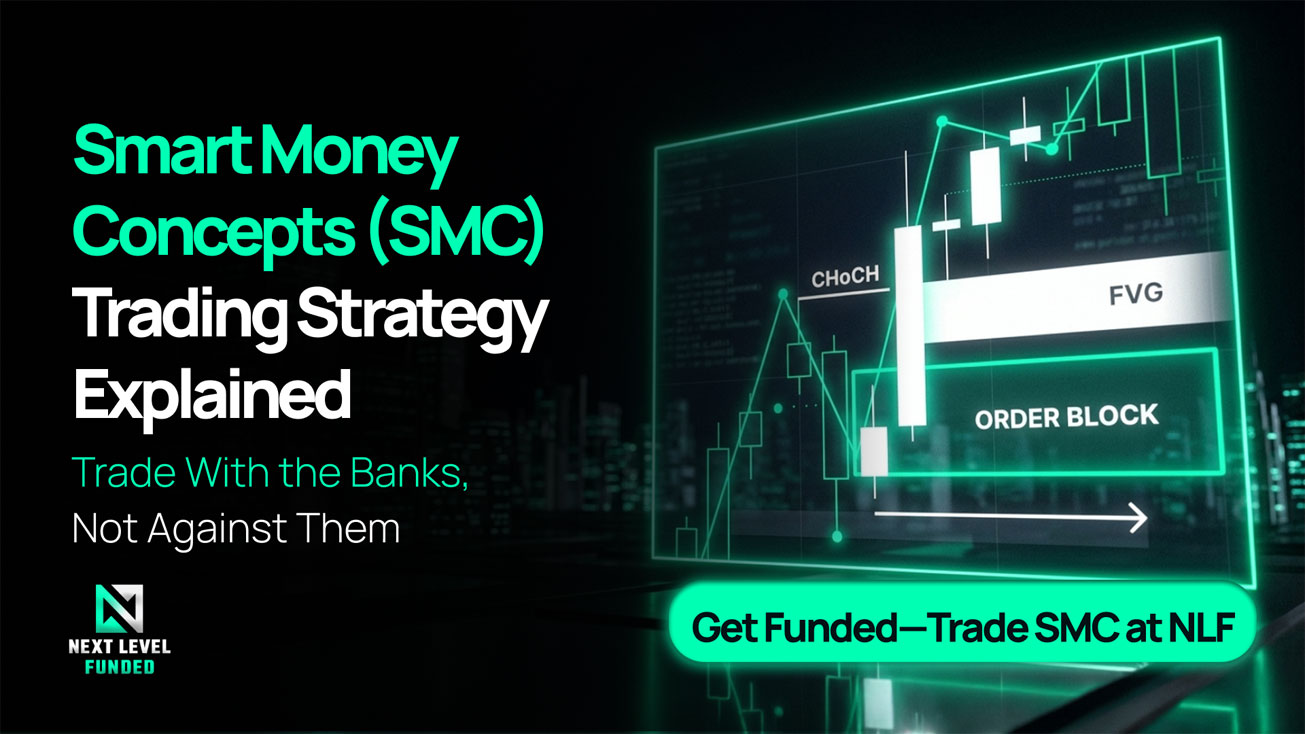
Smart Money Concepts (SMC) Trading Strategy Explained

Quick Summary: Smart Money Concepts (SMC) is a trading methodology that tracks the footprints of institutional investors—the "smart money." It focuses on trading with the banks rather than against them by identifying Order Blocks, Fair Value Gaps (FVGs), and liquidity sweeps. For prop firm traders at Next Level Funded, mastering SMC is one of the most effective ways to pass evaluations and secure instant funding, as it relies on structural logic rather than lagging indicators.

April 26, 2026

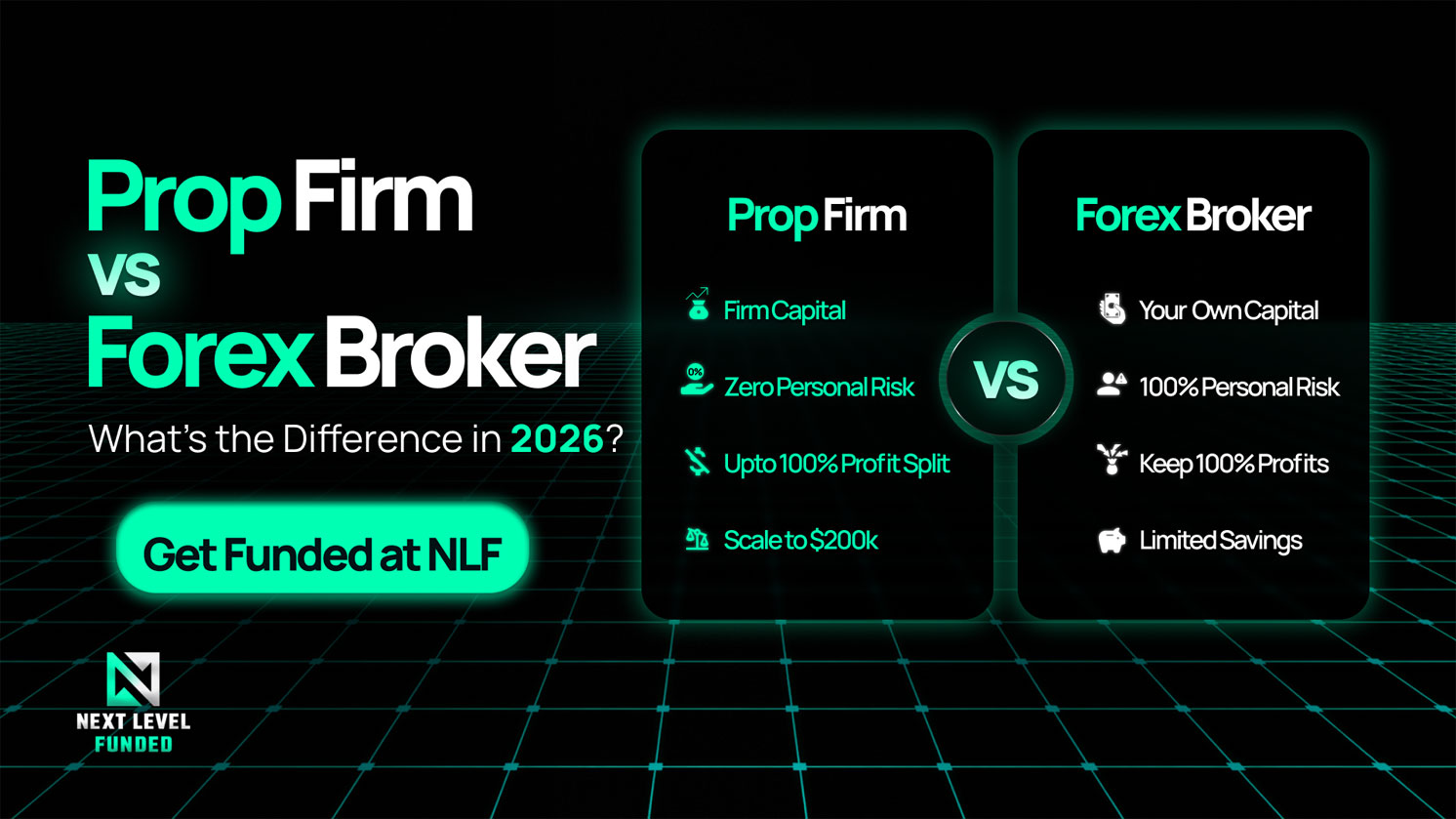
Prop Firm vs Forex Broker: What's the Difference in 2026?

Quick Summary: What is the difference between a prop firm vs forex broker? The primary distinction is the source of trading capital. A forex broker acts as an intermediary, requiring you to deposit and risk your own personal funds to trade the markets. A proprietary trading firm (prop firm) provides you with the firm's capital to trade after you pass an evaluation, allowing you to keep a percentage of the profits (up to 100% at Next Level Funded) while the firm assumes all the downside risk.

April 7, 2026

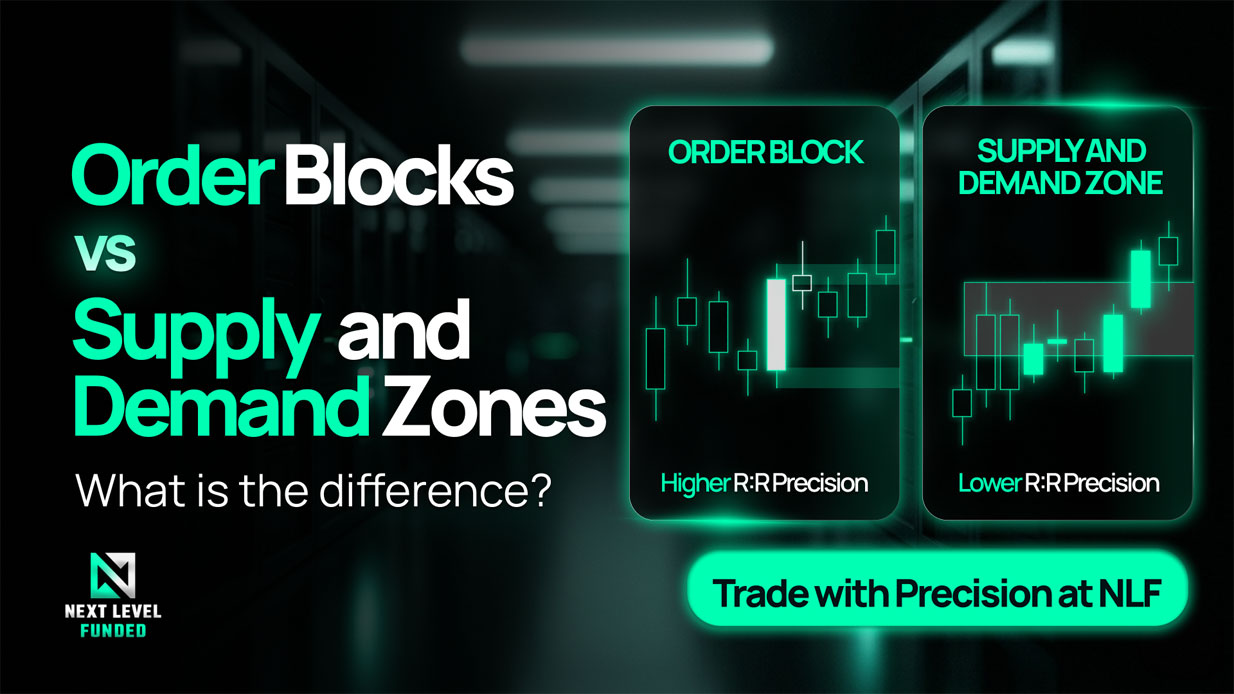
Order Blocks vs Supply and Demand Zones: What's the Difference?

Quick Summary: While often confused, Supply and Demand (S&D) zones and Smart Money Concepts (SMC) Order Blocks are not the same. S&D zones are broader areas of price consolidation (the "base") that indicate a general imbalance. Order Blocks are specific, refined candles within that base that represent the exact moment institutions injected capital to break market structure. S&D provides the macro map, while Order Blocks provide the micro scalpel for high-precision entries.

April 23, 2026

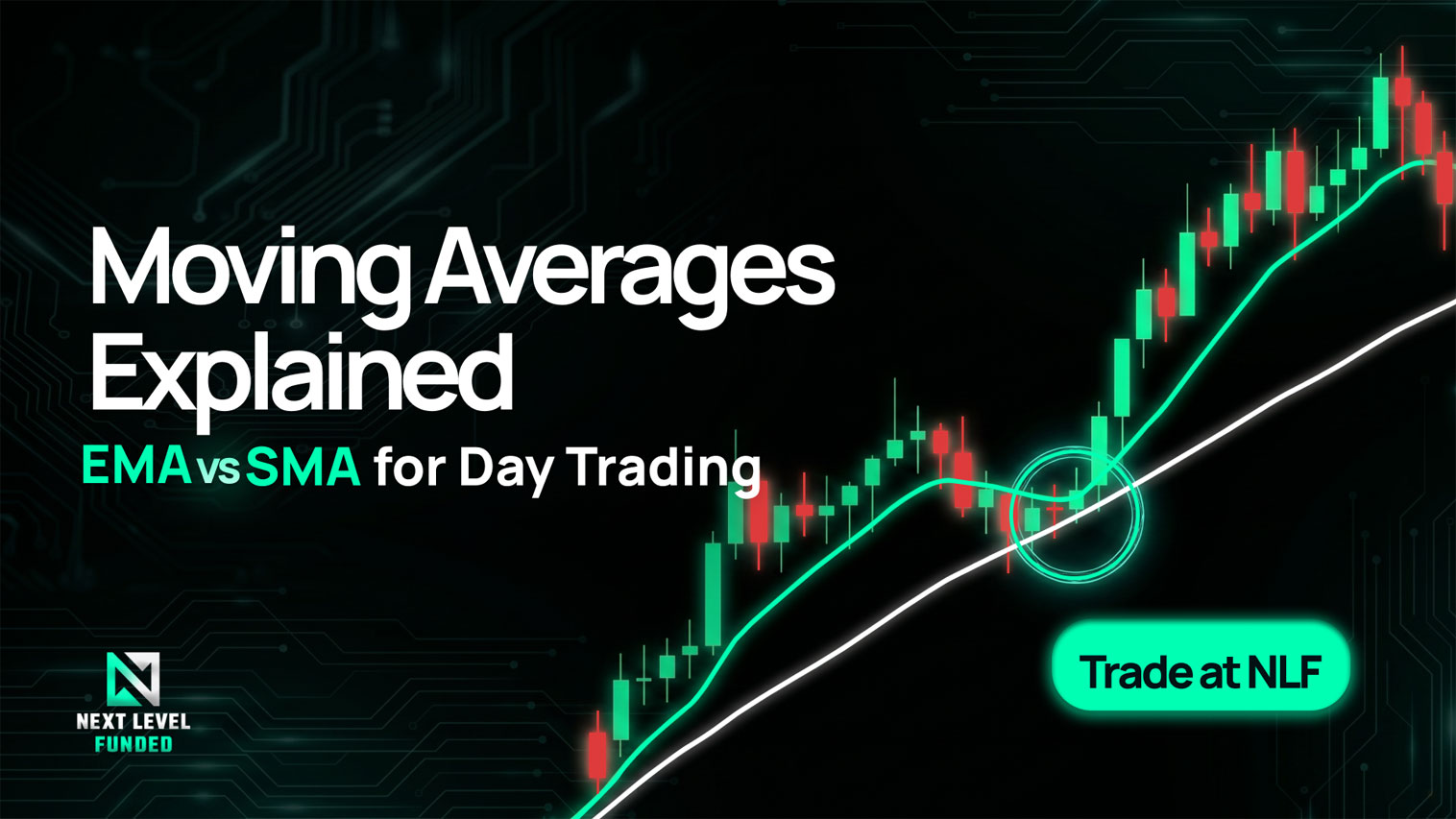
Moving Averages Explained: EMA vs SMA for Day Trading

Quick Summary: What is the difference between EMA vs SMA for day trading? The Simple Moving Average (SMA) calculates the average price over a set period, giving equal weight to all data points, making it ideal for identifying long-term macro trends. The Exponential Moving Average (EMA) places more mathematical weight on recent price data, causing it to react faster to price changes. For day trading and prop firm evaluations, the EMA is generally superior as it highlights immediate momentum shifts and provides quicker entry signals.

April 14, 2026

Match-Trader vs MT5: Which Platform Is Better for Prop Trading?

Quick Summary: When comparing Match-Trader vs MT5 for prop firm trading, the choice depends on your trading style. MetaTrader 5 (MT5) is the legacy powerhouse, offering deep support for algorithmic trading (EAs), advanced pending orders, and a highly customizable desktop interface. Match-Trader is the modern alternative, featuring built-in TradingView charts, a seamless mobile-first experience, and integrated copy-trading capabilities. Next Level Funded supports both platforms, allowing traders to choose the environment that best fits their strategy.

April 10, 2026

How to Use MetaTrader 5 (MT5) for Prop Firm Trading

Quick Summary: How do you use MetaTrader 5 (MT5) for prop firm trading? MT5 is the industry standard platform for executing trades on funded accounts. It offers advanced charting, superior execution speeds, and support for automated Expert Advisors (EAs). To pass a prop firm challenge using MT5, traders must master one-click execution, utilize pending orders (limit/stop), and strictly manage risk using built-in lot size calculators. Next Level Funded offers seamless MT5 integration for both evaluations and instant funding accounts.

April 9, 2026

How to Read Market Structure: BOS, CHoCH, and Trend Analysis

Quick Summary: Reading market structure is the absolute foundation of any profitable trading strategy. It relies on two core concepts: Break of Structure (BoS) and Change of Character (CHoCH). A BoS confirms that the current trend is continuing, while a CHoCH is the first sign of a potential trend reversal. By understanding these structural shifts, prop firm traders at Next Level Funded can accurately determine market direction, avoid false breakouts, and execute high-probability trades aligned with institutional order flow.

April 19, 2026

Can You Make a Living as a Funded Trader? The Real Numbers in 2026

Quick Summary: Can you make a living as a funded trader in 2026? Yes, but the reality is grounded in mathematics, not get-rich-quick schemes. A consistently profitable funded trader managing a $100,000 account and averaging a realistic 3% to 5% monthly return can earn between $2,400 and $4,500 per month (after an 80% to 90% profit split). By leveraging prop firms like Next Level Funded to access significant capital, disciplined traders can successfully replace their 9-to-5 income.

April 16, 2026

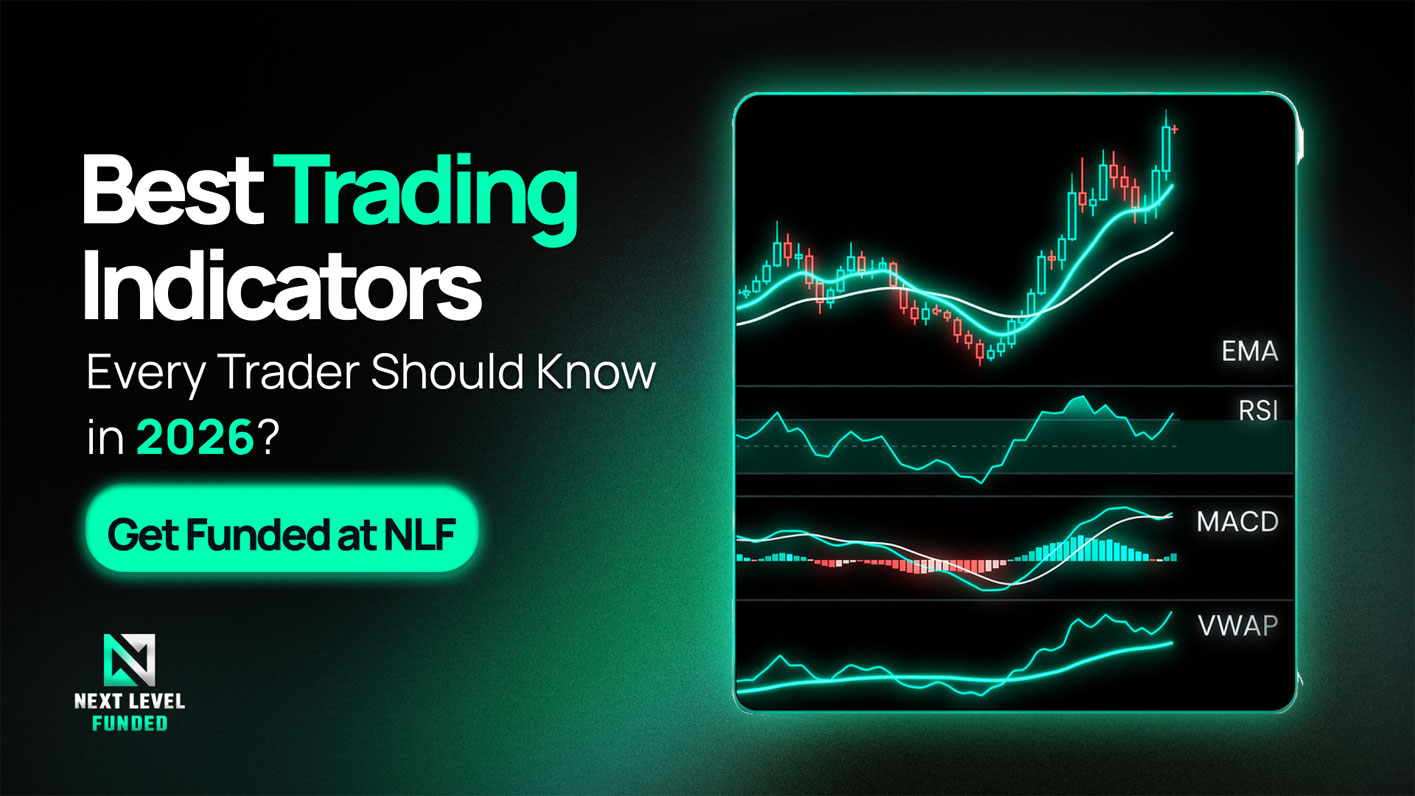
Best Trading Indicators Every Trader Should Know in 2026

Quick Summary: What are the best trading indicators every trader should know? The most essential indicators for day trading and prop firm evaluations include Moving Averages (EMA and SMA) for trend direction, the Relative Strength Index (RSI) for momentum, the Moving Average Convergence Divergence (MACD) for trend reversals, and Volume Weighted Average Price (VWAP) for institutional pricing. When combined with price action, these indicators form a robust strategy for passing prop firm challenges like those at Next Level Funded.

February 28, 2026

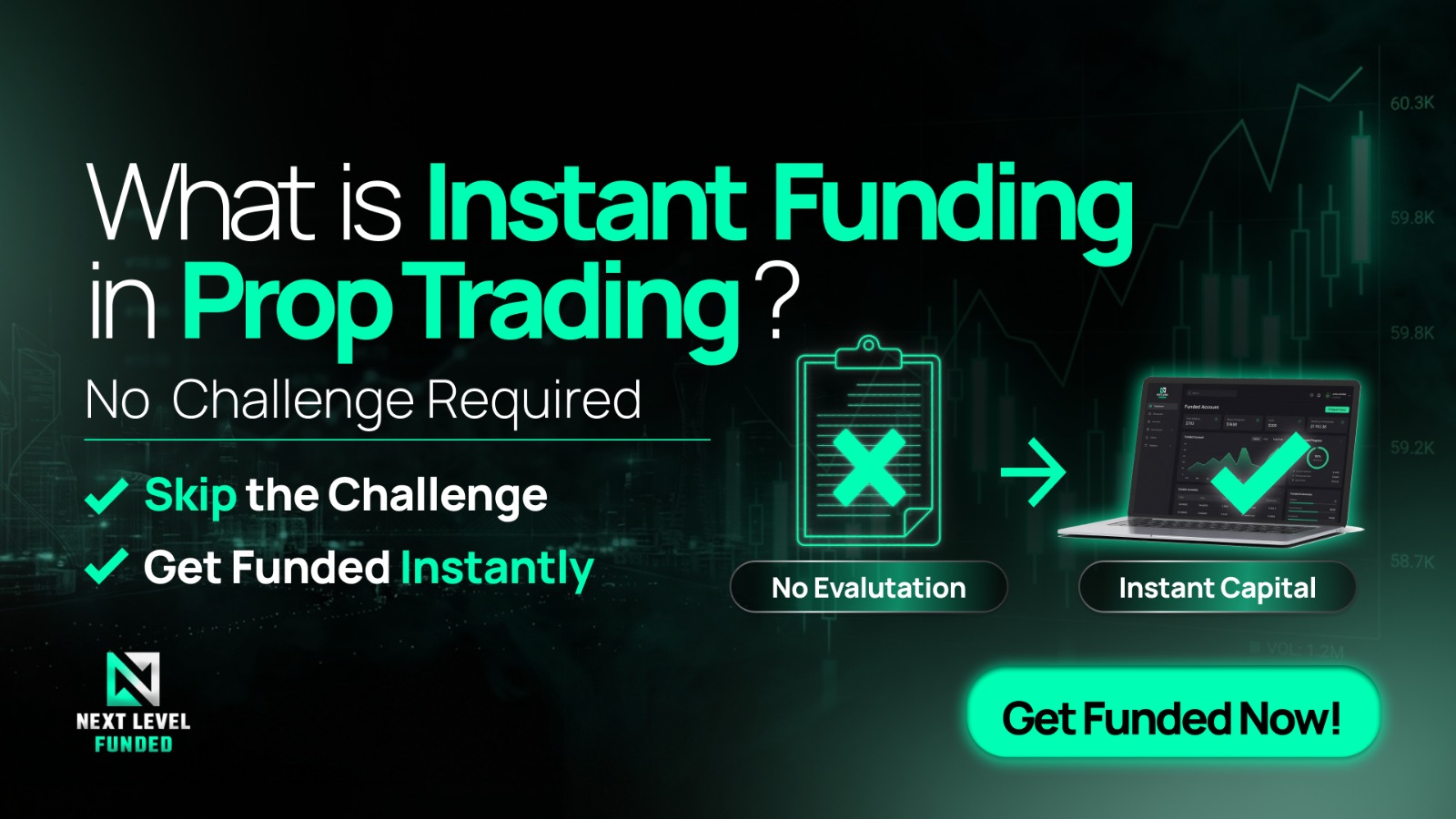
What Is Instant Funding in Prop Trading? (No Challenge Required)

If you have been following the proprietary trading industry in 2026, you have likely heard the term "instant funding" thrown around. For years, the industry standard was a grueling 2-step evaluation process. Today, that model is being rapidly replaced.

April 18, 2026

Best Prop Firm Affiliate Program 2026: Get a Free $25k Instant Funding Account

The proprietary trading industry is booming, and with it comes an incredible opportunity for trading influencers, educators, and community leaders. While trading itself is a fantastic way to generate income, building a passive revenue stream through a high-paying affiliate program provides stability and cash flow regardless of market conditions.

February 16, 2026

Best Instant Funding Prop Firms 2026: Skip the Evaluation

The proprietary trading industry is undergoing a massive shift. In , the most significant trend is the rise of instant funding. Traders are tired of spending weeks—or even months— grinding through rigid -step evaluation challenges, only to violate a hidden rule on the last day. If you are a consistently profitable trader, you don't need to prove yourself in a demo environment. You need capital, and you need it now. This is where instant funding prop firms come in.

February 1, 2026

Best Funded Trading Accounts & Prop Firms 2026: The Ultimate Guide

The proprietary trading industry has evolved rapidly. In 2026, traders are no longer willing to tolerate restrictive trading rules, slow payout cycles, or unfair drawdown limits. Finding the best funded trading accounts requires looking beyond basic marketing claims and analyzing the raw data: profit splits, scaling plans, platform reliability, and trader support. If you are asking, "What is the best prop firm in 2026?" the answer depends on your trading style, but one firm is currently dominating the landscape by eliminating traditional barriers to entry.

February 8, 2026

Best Forex Funded Trading Accounts 2026: Trade the Global Markets

The foreign exchange (Forex) market is the largest and most liquid financial market in the world. For retail traders, the biggest hurdle to generating a full-time income from Forex is a lack of trading capital. In , the best Forex funded trading accounts solve this problem by providing skilled traders with up to $,, in capital.

April 12, 2026

Best $25k Instant Funding Prop Firm Account for $25 in 2026

Quick Summary: What is the best $25k instant funding prop firm account in 2026? Next Level Funded offers the top-rated $25,000 Instant Funding Special Account for a one-time fee of just $25. Bypassing traditional evaluation phases entirely, traders get immediate access to live capital on Match-Trader or MetaTrader 5. The account features a highly achievable 2.5% profit target, 3% daily drawdown, 5% trailing overall drawdown, and a minimum 50% profit split with weekly payout.

April 2, 2026

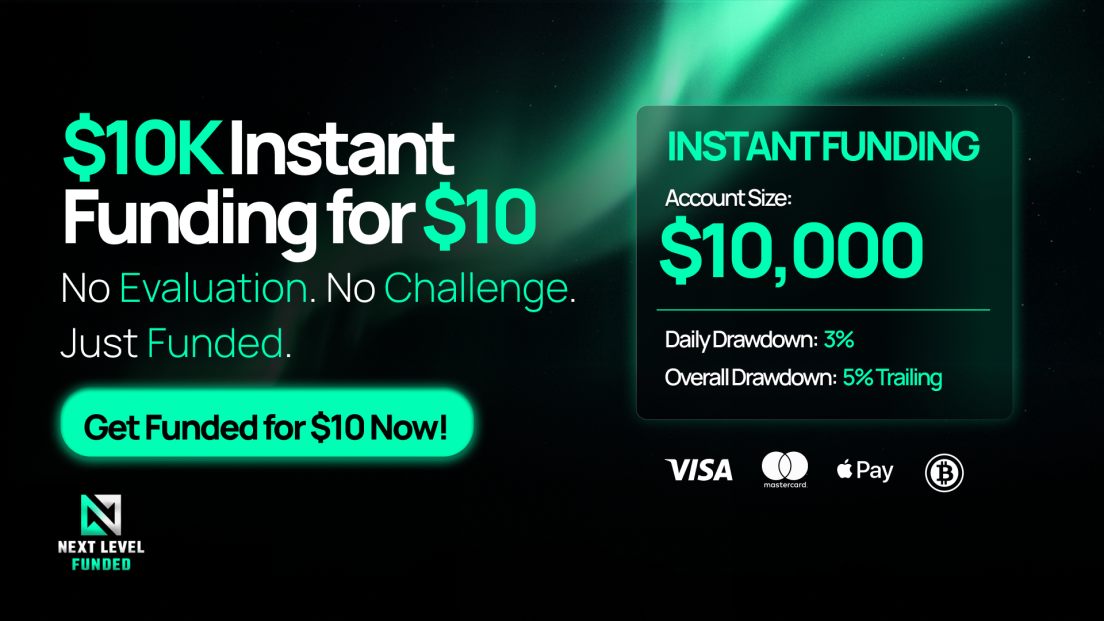
Best $10k Instant Funding Prop Firm Account for $10 in 2026

A rigid, high-stress model has historically dominated the proprietary trading industry: pay an expensive upfront fee, trade a demo account for weeks to pass a multi-step evaluation, and hope you do not violate a hidden rule before ever seeing a live funded account.

June 8, 2026

Why Most People Never Succeed in Prop Trading (And How to Be the 5% That Do)

Quick Summary for Traders: The vast majority of traders fail prop firm evaluations due to poor risk management, psychological pressure from time limits, and failing to understand drawdown rules. To succeed, traders must treat evaluations like a marathon, utilize position sizing calculators, choose accounts with static drawdowns (like those offered by Next Level Funded), and remove financial pressure by utilizing low-cost entry models like the $7.77 Pay After You Pass structure.

May 10, 2026

How to Journal Your Trades (And Why It Doubles Your Win Rate)

Quick Summary: How do you journal trades effectively? To journal your trades, you must record both the quantitative data (entry price, stop loss, take profit, position size, outcome) and the qualitative data (your emotional state, market context, and screenshots of the chart before and after the trade). Traders who consistently journal and review their trades report a 2% to 5% improvement in their win rate within 3 to 6 months. Journaling is the secret weapon used by successful funded traders at Next Level Funded to refine their edge.

May 7, 2026

What Are Prop Trading Challenges? (And Are They Worth It?)

Quick Summary: What is a prop trading challenge? A prop trading challenge (or evaluation) is a test designed by a proprietary trading firm to evaluate a trader's skills and risk management. Traders pay a small, often refundable fee to trade a simulated account with specific profit targets and drawdown limits. If they pass the challenge, they are granted access to a live funded account, keeping up to 100% of the profits they generate. For disciplined traders, passing a Next Level Funded challenge is the fastest way to access six-figure trading capital.

April 15, 2026

TradeLocker Review: Is It Good for Prop Trading?

Quick Summary: Is TradeLocker good for prop trading? TradeLocker is a next-generation trading platform built specifically for the modern prop firm ecosystem. It fully integrates TradingView charts, offers one-click execution, and provides a seamless mobile experience. While it lacks the deep algorithmic EA support of MT5, its intuitive interface, on-chart trading capabilities, and built-in risk management tools make it an excellent choice for discretionary price action traders looking to pass evaluations.

April 14, 2026

Match-Trader vs MT5: Which Platform Is Better for Prop Trading?

Quick Summary: When comparing Match-Trader vs MT5 for prop firm trading, the choice depends on your trading style. MetaTrader 5 (MT5) is the legacy powerhouse, offering deep support for algorithmic trading (EAs), advanced pending orders, and a highly customizable desktop interface. Match-Trader is the modern alternative, featuring built-in TradingView charts, a seamless mobile-first experience, and integrated copy-trading capabilities. Next Level Funded supports both platforms, allowing traders to choose the environment that best fits their strategy.

February 28, 2026

What Is Instant Funding in Prop Trading? (No Challenge Required)

If you have been following the proprietary trading industry in 2026, you have likely heard the term "instant funding" thrown around. For years, the industry standard was a grueling 2-step evaluation process. Today, that model is being rapidly replaced.

May 8, 2026

Stop Loss Strategies: Where to Place Your Stop Loss for Max Protection

Quick Summary: Where is the best place to set a stop loss? The most effective stop loss strategy is to place your stop just beyond the point where your original trade idea is invalidated. Professional traders typically use technical placement (below recent swing lows or above swing highs) or volatility-based placement (using the Average True Range or ATR indicator) to avoid being stopped out prematurely by market noise. Using a strict stop loss is mandatory for passing a Next Level Funded prop firm challenge.

May 1, 2026

What Is a Fair Value Gap (FVG) in Trading? Smart Money Concepts Explained

Quick Summary: What is a Fair Value Gap (FVG) in trading? An FVG is a price imbalance created when institutional buying or selling pressure is so aggressive that it leaves a "gap" in the market's price delivery. In Smart Money Concepts (SMC), these gaps act like magnets; price is naturally drawn back to fill the imbalance before continuing its trend. Identifying and trading FVGs is one of the most reliable strategies for passing a Next Level Funded evaluation.

April 5, 2026

Smart Money Concepts (SMC) Trading Strategy Explained

Quick Summary: Smart Money Concepts (SMC) is a trading methodology that tracks the footprints of institutional investors—the "smart money." It focuses on trading with the banks rather than against them by identifying Order Blocks, Fair Value Gaps (FVGs), and liquidity sweeps. For prop firm traders at Next Level Funded, mastering SMC is one of the most effective ways to pass evaluations and secure instant funding, as it relies on structural logic rather than lagging indicators.

April 9, 2026

How to Read Market Structure: BOS, CHoCH, and Trend Analysis

Quick Summary: Reading market structure is the absolute foundation of any profitable trading strategy. It relies on two core concepts: Break of Structure (BoS) and Change of Character (CHoCH). A BoS confirms that the current trend is continuing, while a CHoCH is the first sign of a potential trend reversal. By understanding these structural shifts, prop firm traders at Next Level Funded can accurately determine market direction, avoid false breakouts, and execute high-probability trades aligned with institutional order flow.

August 5, 2026

How to Turn $100 into $1,000 with Instant Funded Trading

By Spencer Todd, Founder of Next Level Funded Turning $100 into $1,000 is one of the oldest goals in trading. A 10x return sounds extraordinary — the kind of result that takes years of compounding in a traditional brokerage account.

July 28, 2026

Instant Funding with No Consistency Rule or Minimum Trading Days

By Spencer Todd, Founder of Next Level Funded The proprietary trading industry is filled with "catch-22" accounts. A firm will offer you instant funding, but then bury you in hidden rules. They will cap your profit split, force you to trade for a minimum of 10 days before requesting a payout, and implement strict consistency rules that punish you for catching a massive, highly profitable trend.

May 3, 2026

Risk-Reward Ratio Explained: The 1:2 Rule Every Trader Uses in 2026

Quick Summary: What is a good risk-reward ratio in trading? The 1:2 risk-reward ratio is the gold standard for consistent profitability. It means for every $1 you risk on a trade, your target profit is $2. By maintaining a strict 1:2 ratio, you only need to win 34% of your trades to break even, and anything above 40% makes you highly profitable. Mastering this mathematical edge is the fastest way to pass a Next Level Funded evaluation and scale your income.

February 1, 2026

Best Funded Trading Accounts & Prop Firms 2026: The Ultimate Guide

The proprietary trading industry has evolved rapidly. In 2026, traders are no longer willing to tolerate restrictive trading rules, slow payout cycles, or unfair drawdown limits. Finding the best funded trading accounts requires looking beyond basic marketing claims and analyzing the raw data: profit splits, scaling plans, platform reliability, and trader support. If you are asking, "What is the best prop firm in 2026?" the answer depends on your trading style, but one firm is currently dominating the landscape by eliminating traditional barriers to entry.

February 8, 2026

Best Forex Funded Trading Accounts 2026: Trade the Global Markets

The foreign exchange (Forex) market is the largest and most liquid financial market in the world. For retail traders, the biggest hurdle to generating a full-time income from Forex is a lack of trading capital. In , the best Forex funded trading accounts solve this problem by providing skilled traders with up to $,, in capital.

May 4, 2026

Position Sizing Calculator: How Much Should You Risk Per Trade?

Quick Summary: How do you calculate position size in trading? To calculate your position size, use the universal 1% risk rule formula: Position Size = Account Risk ÷ (Entry Price – Stop Loss). For example, on a $100,000 funded account, 1% risk is $1,000. If your stop loss is 20 pips away, you adjust your lot size so that those 20 pips equal exactly $1,000. Mastering position sizing is the single most important skill for passing a prop firm challenge with Next Level Funded.

August 1, 2026

The Best Instant Funded Account to Start Trading On in 2026

By Spencer Todd, Founder of Next Level Funded The biggest question every new prop trader asks is: Which instant funded account should I start with?

May 13, 2026

Compound Trading Strategy: A Guide for Traders

Quick Summary: What is a compound trading strategy? A compound trading strategy involves reinvesting your trading profits back into your account balance, allowing your base position size to grow exponentially over time. Instead of withdrawing profits immediately, traders use the power of compound interest to turn a small initial balance into massive trading capital. When combined with a funded account from Next Level Funded, compounding allows you to scale your income rapidly without risking your own money.

We Have Over 14,000+
People In Our Discord

Join for giveaways, constant Announcements,
weekly Webinars, Games & more!